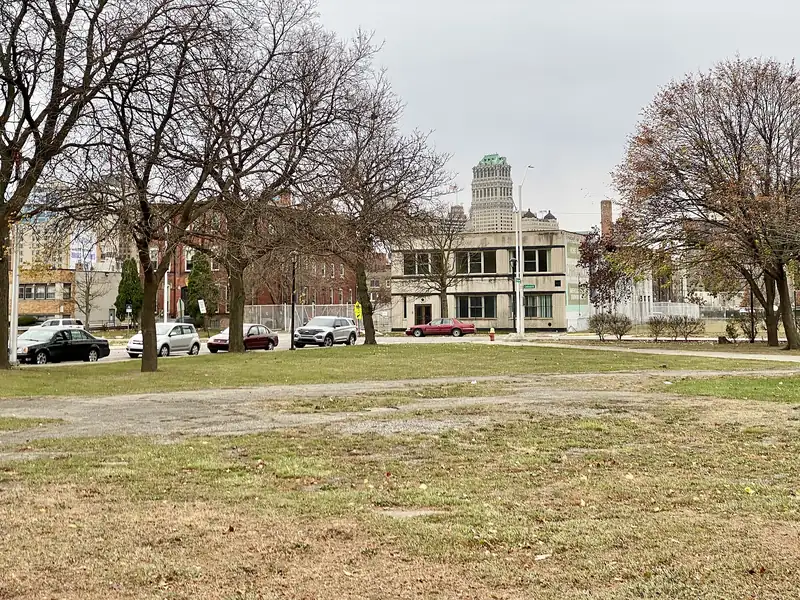
Between the University, the Medical Centre and Older Housing
Midtown is home to Wayne State University and the Detroit Medical Center, and the housing around those institutions is mixed. Older apartment buildings sit near condos and historic houses. Restaurants and institutional buildings fill the gaps between them, and single-family streets run between larger blocks. A rodent job here can therefore be a shared basement under a block of flats, a chase running up through several units, or a single old house with a flat roof and a porch line that has opened over time.
That mix shapes the inspection. In a multi-unit building, one resident's kitchen signs may come from a route that serves the whole stack of units. In a historic house on a side street, the route is more likely to be its own foundation, its own roof line and its own utility openings. The technician has to work out which case it is before recommending clearing or sealing, because the owner of the route is not always the person who found the droppings.
Shared Basements, Chases and Flat Roofs
Older multi-unit stock creates shared routes. A shared basement gives rodents a sheltered space below every unit, with pipe runs, storage cages and old openings in one place. Shared chases, the vertical voids that carry pipes and wires, let mice move between floors without crossing an open room. A gap at basement level can therefore show up as activity in a flat above, and sealing only around that flat's own cupboards will not close the building.
Flat roofs add a second level of entry. Gaps at a roof edge, around a vent, or where a flat roof meets a wall can let mice into a ceiling void or attic space, especially in a building where the roof has been repaired in sections over the years. From there, activity can spread along the top floor. An inspection in Midtown should look up as well as down, checking roof lines and top-floor voids alongside the basement.
Single-family houses between the larger buildings have their own list: aging mortar, older utility entries and seams where additions meet the house. City-wide, about 86 percent of Detroit residential structures predate 1970, and Midtown reflects that age.
Seeing signs in a Midtown flat or house? Call to book an inspection that checks the shared basement and roof routes, not just one room.
Call (313) 555-0100A Visit That Covers Both a Unit and the Building Systems
A Midtown job usually starts with a full inspection that covers the affected unit and, where the building allows it, the basement, the chases and the roof access. Findings are set out as a map with photos, tying each sign of activity to the opening or route that likely serves it. That map is what lets a landlord, a condo owner or a householder see the scope plainly, instead of paying for repeat visits to one unit while a shared route stays open below it.
Clearing follows for the rodents already inside, and entry-point sealing closes the openings in a planned order. In a shared basement that might be gaps around pipes and an old utility hole. In a house it might be a foundation joint, a porch gap and a roof-edge opening. A follow-up visit rechecks the sealed points and looks for fresh signs, particularly in the weeks when mice move indoors from September to February and look for warmer routes inside.
Jobs booked through this site are fulfilled by an independent, Michigan-licensed pest control operator. This site connects customers with that operator and does not itself perform treatments. Where a top-floor flat or house has had activity in the space above it, attic cleanup can be planned after clearing and sealing, so the cleaned space is not left open to new animals.
Help for Houses, Flats and Small Businesses
The services used most in Midtown follow the building type. For mice in a flat, a student house or a historic home, work on indoor mice covers the clearing side, paired with sealing of the chase, basement or roof route they used. For a landlord with several units, the inspection map is the useful document, because it shows whether one unit or the whole building system needs work.
Restaurants add food storage and waste to the same shared-basement picture, so their inspection should include delivery and bin areas. Longer term, day-to-day prevention covers waste and storage habits that reduce food and shelter around a building. Detroit's BSEED does exterior baiting only and does not exterminate inside homes.
Problems and pain points in Midtown
Scratching above a top floor flat at night often points to a flat roof edge or ceiling void, not the room below it. Droppings in one kitchen can be just as confusing when the basement and chases below are shared with other homes. In a historic house the unease is different. You worry about wires in old walls and about what is hidden in a basement or attic you rarely enter.
Many people here distrust a quote that treats one flat on its own. If the route stays open in a shared basement, clearing one unit will not hold, and the fear is paying twice for the same signs. Landlords and owners need a map that shows which openings belong to the unit and which belong to the building, plus a follow-up that rechecks both.
Common entry points in Midtown homes
| Housing feature | Where rodents get in | What closes it |
|---|---|---|
| Shared basements | Gaps around pipes, old utility holes and openings near storage cages | Seal pipe gaps and close old utility holes |
| Shared chases | Openings where pipes and wires rise between floors | Close chase gaps at basement and unit levels |
| Flat roofs | Gaps at the roof edge, around vents, or where the roof meets a wall | Repair the roof edge and screen vents without blocking them |
| Historic house foundations | Aging mortar and gaps at sill plates and foundation joints | Repair mortar joints and seal foundation gaps with mesh backing where wide |
| Porches and additions | Seams where a porch or addition meets the original house | Seal the seam inside and out |
Signs to check in Midtown homes and flats
- Droppings in a kitchen while neighbors report no signs
- Noise in a top floor ceiling below a flat roof
- Gaps around pipes in the shared basement
- Open joints in aging mortar at ground level
- Gaps along a porch line or addition seam
- Nesting or droppings in attic or ceiling voids
Rodent services in Midtown
Every Midtown job is part of the wider service area covered across Detroit, and each service below is described in full on the main Detroit rodent control page.
Rodent Exclusion Detroit MI
Exclusion means sealing every entry point: coal chutes, block and stone foundations, sill plates, porch lines and garage gaps, closed with materials rodents cannot chew through. The step that stops new animals using the same routes.
Rodent Inspection Detroit MI
A full check of kitchens, attics, basements, crawl spaces, garages and the alley line, ending with an entry-point map and photos. Start here when you have signs but no certainty about the animal or the route in.
Residential Rodent Control Detroit MI
Work planned around the whole house rather than one room: bungalows, brick colonials and duplexes, with attics, basements, garages, alleys and entry points covered together.
Frequently Asked Questions
Only my flat has mice. Why check the whole building?
In an older Midtown block, flats share a basement, pipe runs and vertical chases, so mice seen in one flat may be using a route that serves several. Checking the shared areas shows whether the entry point is inside your flat or below it. Sealing only your flat can leave the building route open.
Can rodents get in through a flat roof?
Yes. Gaps at a flat roof edge, around vents, or where the roof meets a wall can let mice into a ceiling void or attic space. An inspection of a building with a flat roof should include the roof line and the top-floor void, not only the basement and doors.
Does a historic house need a different check from an apartment?
The list is different. A historic house is checked at its own foundation, sill plates, porch line, utility entries and roof. An apartment is also checked in its shared basement, chases and common storage, because those shared routes can carry rodents between units even when only one flat reports signs.
We rent to students and the house turns over each year. What helps?
A clear inspection map helps most, because it stays with the house when tenants change. It records the entry points found and what was sealed, so a new group is not starting from nothing. Keeping waste storage tidy and reporting fresh signs early also helps, before activity spreads through shared spaces.