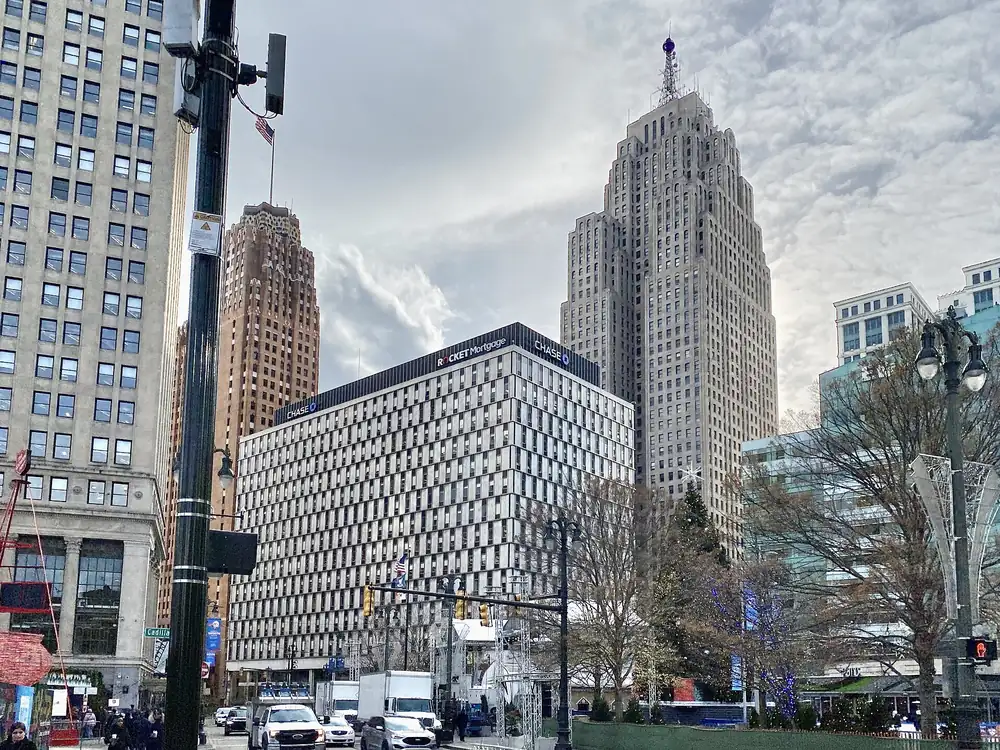
Towers, Lofts and Workplaces in One Small District
Downtown is Detroit's central business district, bordered by M-10, I-75, I-375 and the Detroit River. In a few streets the stock changes completely, from a high-rise tower to a converted loft, an office block, restaurants and a parking structure. That mix is the starting point for any rodent job here. The question is rarely just what is happening inside one room. It is how the building is put together, what sits above and below, and where food, waste and shelter sit in relation to living space.
A house has one foundation line and one set of doors to check. A downtown building has many. Service corridors run behind units, pipes and cables rise through shared chases, and bins are collected from a shared waste or recycling room. A loft conversion can keep an older commercial shell, with openings left from an earlier use that were never fully closed. Ground-floor food premises add deliveries, storage and waste close to the homes above them. None of that makes a building badly run. It does mean an inspection has to think in terms of the whole structure, not a single flat.
Where Rodents Travel in a Downtown Building
The routes follow the building services. Mice can move along pipe runs and through gaps where lines pass from one floor to the next, using a shared wall as cover. Rats are more often linked to lower levels, where loading docks, waste areas and older basement spaces give cover close to food waste. A dock door that does not close tight at the corner, a waste room with gaps around pipes, or a bin area built against a wall with an unsealed opening can give a route indoors that no single resident created.
Parking structures matter too, because they connect to buildings. A garage level with bins or a lift shaft next to living space can shelter rodents near an entry point. Signs in one unit may point to a route two floors away, so a useful visit may need the waste room, dock and basement opened, not just the flat that made the call. Building management often holds those keys, so arrange that access in advance.
Ready to deal with rodents in your Downtown building? Call to book an inspection and get the shared routes and entry points mapped first.
Call (313) 555-0100What a Job Looks Like in a Tower or Mixed-Use Block
The work starts with a full inspection of the unit and, where access allows, the shared areas that serve it. The technician records droppings, rub marks, gnawing and nesting, and notes each opening on a map with photos. That map separates a problem inside one unit from a route through the building, and shows who needs to do what. A building owner is usually the one who can seal a dock, shaft or waste room wall.
Clearing comes next, aimed at the rodents already inside, followed by entry-point sealing in an order that does not trap animals in a wall void. Sealing might mean closing pipe gaps in a shared chase, fitting vent covers, repairing a dock door edge, or closing an old basement opening. A follow-up checks the map again for fresh signs.
Jobs booked through this site are fulfilled by an independent, Michigan-licensed pest control operator. This site connects customers with that operator and does not itself perform treatments. For a manager or owner running several premises, help for commercial premises is the relevant starting point, and questions about price are covered separately in the guide to how rodent control pricing is worked out in Detroit. No figure can be set honestly until the building and its shared routes have been seen.
Services That Fit Downtown Buildings
For a flat or condo, the common needs are an inspection first, then clearing work for the animals inside. Where mice are the main sign, in kitchens, storage cupboards or ceiling voids, work on indoor mice deals with that side of the job. Where rat signs appear at dock, basement or ground level, rat clearing is the service that fits. Both only last if the route in is closed, which is why sealing is planned alongside clearing rather than left as an afterthought.
Upper floors are not out of reach. Mice can reach a roof void through a wall chase, and where a loft has had activity above it, attic cleanup may be needed after clearing and sealing. The city role is limited: Detroit's BSEED does exterior baiting and harborage enforcement only and does not exterminate inside buildings.
Problems and pain points in Downtown
Hearing activity at night in a tower flat is unsettling because the sound may come from a shared chase or ceiling void, not from your own walls. Droppings in a kitchen or storage cupboard are hard to accept when you keep food areas clean, and they do not show where the animals entered. In lofts and offices the worry spreads to wiring in wall voids and to stored items in service areas that you cannot open yourself.
Quotes can feel hard to trust here. One price may cover only work inside your unit while the real route sits in a waste room, dock or parking level that management controls. People also worry that they will pay, see signs return, and be left to chase two parties at once. A clear map that separates unit openings from shared openings, with a follow-up check, is what makes the plan easy to judge.
Common entry points in Downtown homes
| Housing feature | Where rodents get in | What closes it |
|---|---|---|
| Shared walls and pipe chases | Gaps where pipes and cables pass from one floor to the next | Seal pipe gaps in the chase and close wall void openings |
| Loading docks | Dock door that does not close tight at the corner | Repair the door edge and seal the corner gap |
| Shared waste and recycling rooms | Gaps around pipes and unsealed wall openings next to bins | Seal pipe gaps and close wall openings in the room |
| Converted lofts in older commercial shells | Openings left from an earlier use that were never fully closed | Close old openings and fit covers where vents remain in use |
| Attached parking structures | Gaps where the garage meets the building, near bins and lift shafts | Seal the junction gaps and check shaft and storage edges |
Signs to check in Downtown flats and workplaces
- Droppings in kitchens, storage cupboards or ceiling voids
- Rub marks or gnawing near pipe runs and shared walls
- Scratching sounds that seem to move between floors at night
- Gaps around pipes in the waste room or basement
- Dock doors with daylight showing at a corner
- Signs near bins or stored items in the parking level
Rodent services in Downtown
Every Downtown job is part of the wider service area covered across Detroit, and each service below is described in full on the main Detroit rodent control page.
Rodent Exclusion Detroit MI
Exclusion means sealing every entry point: coal chutes, block and stone foundations, sill plates, porch lines and garage gaps, closed with materials rodents cannot chew through. The step that stops new animals using the same routes.
Rodent Inspection Detroit MI
A full check of kitchens, attics, basements, crawl spaces, garages and the alley line, ending with an entry-point map and photos. Start here when you have signs but no certainty about the animal or the route in.
Commercial Rodent Control Detroit MI
Rodent work for apartments, offices and other business premises, built on monitoring, documentation and response, covering docks, waste and storage areas and the records kept for inspections and audits.
Frequently Asked Questions
I live in a condo. Who handles the shared walls and waste room?
A resident can usually arrange work inside their own unit, but shared walls, service corridors, waste rooms and docks are normally the building owner or management company's responsibility. An inspection map helps here, because it shows which openings sit inside the unit and which sit in common areas, so each part can be passed to the right person.
Can rodents really reach an upper-floor flat?
Yes. Mice travel inside wall voids and along pipe and cable runs that rise through a building, so an upper floor can see activity even when the entry point is at ground or basement level. That is why an inspection checks shared chases and service routes, not only the doors and windows of the flat itself.
Our building has a ground-floor restaurant. Does that change the job?
It changes what needs checking. Deliveries, food storage and waste sit close to the homes and offices above, and dock doors, bin stores and gaps around pipes in that unit can provide a route into the wider building. The inspection should include those ground-floor service areas where access can be arranged.
What about the parking structure attached to our building?
A parking structure should be checked as part of the building, especially where it shares a wall, a lift shaft or a storage area with living or working space. Bins, stored items and gaps where the structure meets the main building can shelter rodents close to an entry point indoors.