How Rat Removal Works, From Survey to Clearance
Removal starts with looking, not with traps on the ground. The survey walks the house inside and out and records where rats are travelling, feeding and sheltering. The technician looks for droppings, rub marks along walls, gnaw marks, burrow openings, tracks in dusty areas, and gaps where pipes, vents or utility lines pass through the foundation. Fresh droppings and soft material at a burrow entrance point to current use. Old, dry signs point to a route that still needs checking, even if activity there has slowed.
Detroit houses give that survey a long checklist. About 86 percent of Detroit residential structures were built before 1970, according to the City of Detroit NRSA plan for FY2025 to 2029, based on ACS 2020 data. About 34.8 percent of housing units were built in 1939 or earlier, according to ACS 2022 5-year data. About 72 percent of housing units are single-family homes, counting attached homes, according to ACS 2022 5-year data. Age alone does not prove rats are present. Age does mean older foundations, settled mortar, past repairs and forgotten openings all belong on the list the survey works through.
Next comes the trap plan. Traps go where rats already travel, along foundation lines, beside burrows, near food sources and on runs between shelter and food. Placement matters more than the raw number of traps. A trap set in open ground a rat never crosses will sit empty, while a trap set tight to a wall on an active run has a real chance of working. That placement work is the core of rat trapping detroit jobs, and it is why a plan drawn from a survey reads differently from a plan guessed over the phone. A rat removal company detroit homeowners call should be able to show you, on your own property, where each trap sits and why it sits there.
Checks follow on a set cycle. Each visit, caught rats are removed, traps are reset or moved, and new signs are recorded. If catches stay high in one spot, the plan looks harder at the food or shelter drawing rats to that spot. If one run goes quiet while another stays active, traps shift to the active run. The check cycle also protects pets, children and neighbours, because every trap is accounted for at each visit and no trap is left forgotten in a yard or crawl area.
Clearance is the last step, and it is a judgement based on evidence. A job is cleared when checks find no catches, no fresh droppings and no new burrow activity over an agreed run of visits. One quiet check after a busy week is not enough on its own. The survey notes, the catch record and the final walk of the foundation line together decide whether removal is done or whether the plan needs more time. You should hear that decision explained in plain terms, with the signs it rests on.
Burrows Along Foundations, Garages, and Alley Lines
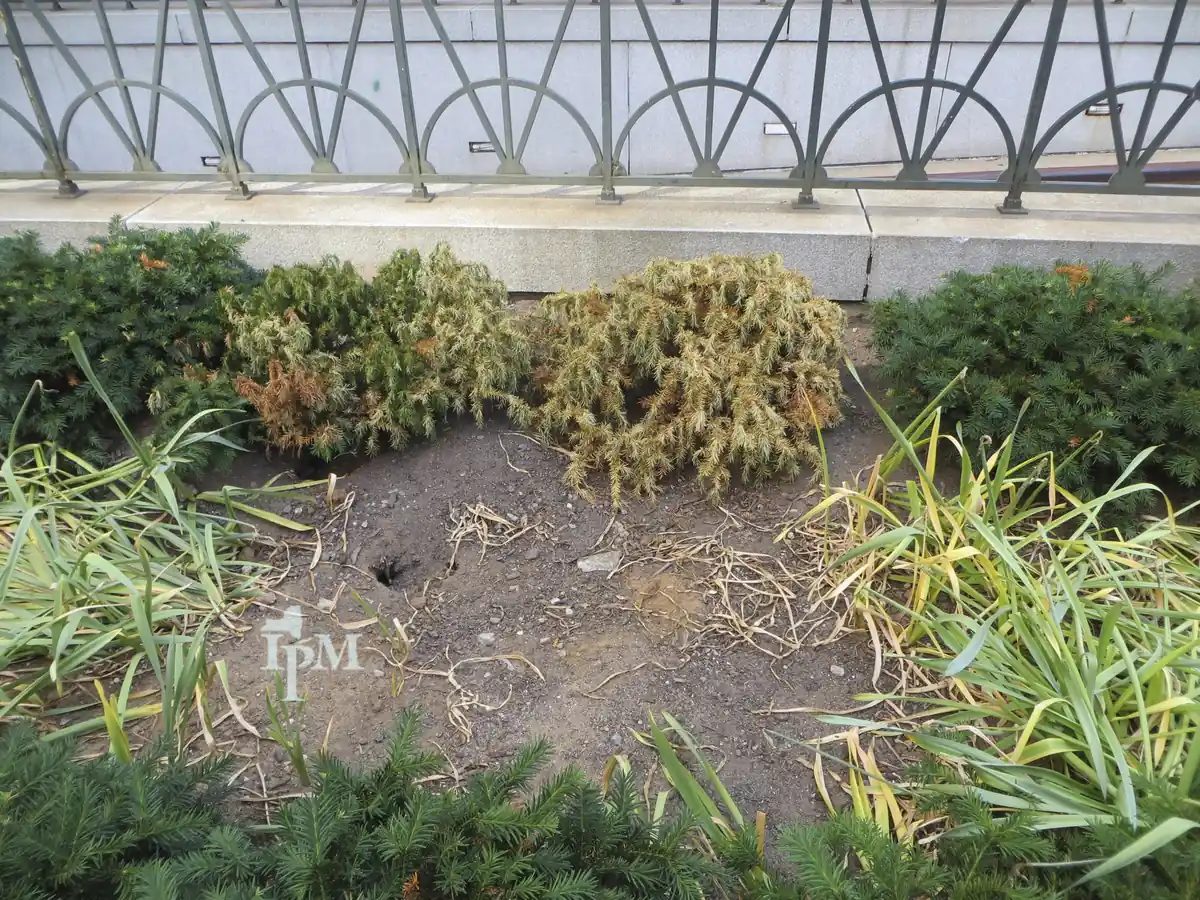
Burrows are where many outdoor rat jobs begin. A burrow is a hole with a tunnel behind it, often at the base of a foundation, beside a garage slab, under a porch step or along a fence line. Loose soil at the entrance, a smooth worn edge and droppings nearby are common signs. Rats use burrows for shelter and raise young there, so a yard can hold an active problem even when no rat has been seen inside the house.
The survey maps each burrow and works out which ones are active. An active burrow gets covered by the trap plan, and its entrances are watched at checks for fresh digging. A burrow that stays inactive through the check cycle can be filled and levelled once clearance is reached, so the hole stops offering ready shelter. Filling a burrow rats still use only pushes digging to a new spot nearby, which is why the order matters: clear first, then close.
Garage and alley lines need the same attention. Garages store pet food, bird seed, tools and trash, and a garage door that sits unevenly leaves a corner gap at ground level. Alleys sit behind many Detroit homes, and the city stopped maintaining residential alleys in the late 1980s, so alley upkeep is the responsibility of homeowners, according to a University of Michigan Dearborn study from 2021. Overgrowth, dumped material and broken fencing along an alley line give rats covered routes between yards. Clearing your own stretch, cutting cover back from the foundation and fixing your garage line will not solve a whole alley, but it removes shelter on the part of the route you control.
Food habits on your lot shape this section of the job too. Detroit trash and recycling are collected weekly by cart, and carts must be out by 7 a.m. on collection day, according to City of Detroit DPW guidance from November 2024. A cart with a lid that shuts, trash bagged rather than loose, and fallen fruit or spilled seed cleared from the yard all lower what a burrow site offers. Outdoor activity also follows the warm months. In Detroit, outdoor rat pressure runs higher roughly from June through October, when warm weather keeps rats active outside for longer, and burrow checks carry more weight in that part of the year.
Vacant land can sit behind this picture. Detroit had about 87,699 vacant housing units, close to 24 percent of its stock, in the City NRSA figures based on Census 2020, and more than 100,000 vacant lots, according to Detroit Future City in October 2025. A vacant house or lot next door can provide shelter a survey should note when it maps your burrows, without becoming a reason to skip work on your own foundation and alley line.
Rats active around your foundation, garage or alley line? Call to book a survey and get a trap plan set from what is actually found at your house.
Call (313) 555-0100Low-Level Rat Activity Around the House
Some rats stay low. Activity at ground level and below shows up as droppings along a foundation wall, scratching or movement sounds low in a wall, a strong smell near a crawl opening, or signs around floor drains and utility entries. Rats reach these areas through gaps at the foundation line, openings where lines enter the house, and routes from burrows outside. A Detroit rat removal plan has to follow the activity down to that level, because clearing only the yard leaves the low routes open.
The survey handles low areas as a process. It checks the lowest level of the house, crawl openings and the points where plumbing and other lines pass through walls and floors. It notes which signs are fresh and which runs connect an outside burrow to an inside space. If you want to compare what you are seeing with the low level signs listed in the signs guide, including the basement section, that guide sets out the signs by location before you call.
Trapping at this level follows the same rules as trapping outside. Traps sit on the runs rats use, tight to walls and near entry points, and they are checked on the same cycle as the yard traps. Tight spaces change the working method, not the standard of care. Each trap still gets recorded, checked and removed at clearance, and any dead rat is taken out promptly, because smell and droppings in lived space are the complaints homeowners raise most about a low level problem.
Low level work also has a clear limit. Traps clear the rats that are there now. Openings at this level, a cracked joint in a block foundation, a gap around a pipe, a coal chute frame that no longer shuts, stay open after the traps come out. Those openings are sealing work, covered later on this page. The survey should name them as it finds them, so a second job does not appear without warning after the first one ends.
Removal, Extermination, and Sealing: Three Different Jobs
Homeowners often use these three words for the same thing, and that mix up leads to the wrong hire. Removal is the job this page describes: survey the property, set a trap plan, check and reset traps, and clear the rats that are active now. The work is measured by catches, signs and a clearance decision at the end.
Extermination is a hire focused on killing rats, and it is the route to compare when rats are inside living areas, when the problem feels urgent, or when you want a practitioner whose visit is built around that response. If that matches your situation, read about hiring a rat exterminator for a home with rats in living areas before you decide which job to book. Some homes need that hire first. Others need removal of an outdoor and burrow based problem. The survey is what separates the two, and any honest recommendation should point back to signs found at your house.
Sealing, called exclusion (sealing every entry point) in the trade, is the third job. It closes the gaps rats use to get in: foundation joints, pipe holes, garage corners, porch lines and similar openings. Sealing does not remove a single rat on its own, and removal does not close a single gap on its own. The two jobs fit together in sequence, removal clearing the animals that are present and sealing closing the routes they used.
Cost sits inside this choice, so it pays to be clear about it here. This page carries no price for a removal job, because the size of a job depends on the survey: how many burrows are active, how wide the trapping area runs, how many checks the activity level needs and whether low level work is involved. Market ranges for rat work and the factors that move a figure up or down are set out on the page that explains how rat work is priced and what market ranges look like. Your own figure should come after an inspection, in writing, tied to the plan for your property. A large number quoted before anyone has looked at the house rests on nothing.
When Removal Alone Will Not Keep Rats Out
Removal ends an active problem. Removal alone does not change the conditions that let rats in, and this is where honest expectations matter. If the foundation gap stays open, if the burrow ground along the alley stays undisturbed and food stays easy to reach, new rats can move into the same shelter the cleared rats used. That outcome is common enough that a removal plan should talk about it from the first visit, not after activity returns.
The sealing step is the usual next move. Once clearance is reached, the openings recorded during the survey get closed with materials rats cannot gnaw through, and burrow ground gets levelled where the plan calls for it. You can read about sealing every entry point around the foundation, garage and porch to see what that work covers and how it is checked when it is done. Timing matters here as well. Sealing before clearance can push active rats deeper into a wall or low level space, so the order stays removal first, sealing as clearance is confirmed.
If a vacant house nearby or an untended alley stretch keeps offering shelter, your own sealing and yard work still protect your house, and they are the parts you control. Reporting a harborage problem through city channels is a separate route you can take for property you do not own, and it runs alongside private work rather than replacing it.
If you are comparing a rat removal company, judge the plan in front of you. It should name the survey findings, the trap positions, the check cycle and the clearance test. It should state what the job does not include, and it should point to the sealing step without dressing that step up as already done. Rat removal Detroit MI work that is set out that way gives you something to hold the job to at every check.
How rat removal works, from survey to clearance
- Survey inside and out for droppings, rub marks, gnaw marks, burrow openings, and tracks in dusty areas
- Check gaps where pipes, vents, or utility lines pass through the foundation, and note which signs are fresh
- Map each burrow and work out which ones are active
- Set a trap plan along foundation lines, beside burrows, near food sources, and on runs between shelter and food
- Check traps on a set cycle, remove caught rats, reset or move traps, and record new signs
- Watch active burrow entrances at checks for fresh digging
- Judge clearance when checks find no catches, no fresh droppings, and no new burrow activity over an agreed run of visits
Rat removal methods compared
| Method | How it works | Best for | Limits |
|---|---|---|---|
| Trapping | Traps set on active runs, tight to a wall, along foundation lines, beside burrows, and near food sources, and checked on a cycle | The core method for clearing rats that are active now | Placement matters more than the raw number of traps, and a trap on open ground a rat never crosses will sit empty |
| Bait | Whether any bait is used depends on what the survey finds, where activity sits, and what is around the site, including children and pets | Sites where the survey points to bait as part of the plan | No method is promised before the property has been looked at, and the choice is explained before work starts |
| Burrow filling and levelling | A burrow that stays inactive through the check cycle can be filled and levelled once clearance is reached | Inactive burrows after the rats using them are cleared | Filling a burrow rats still use only pushes digging to a new spot nearby, so the order is clear first, then close |
| Exclusion sealing | Closing gaps rats use, including foundation joints, pipe holes, garage corners, and porch lines | Keeping new rats from using the same routes after clearance | Sealing does not remove a single rat on its own, and removal does not close a single gap on its own |
Related Services
Rat Exterminator Detroit
Rat-only help for burrows by foundations, activity along alley lines, or a rat seen indoors. Entry points around garages, porches and sill plates are checked before a plan built for a wary animal is set.
Rodent Exclusion Detroit MI
Exclusion means sealing every entry point: coal chutes, block and stone foundations, sill plates, porch lines and garage gaps, closed with materials rodents cannot chew through. The step that stops new animals using the same routes.
Rodent Inspection Detroit MI
A full check of kitchens, attics, basements, crawl spaces, garages and the alley line, ending with an entry-point map and photos. Start here when you have signs but no certainty about the animal or the route in.
Frequently Asked Questions
Do you trap or poison rats?
Trapping is the core method of a removal job, with traps set on active runs and checked on a cycle. Whether any bait is used at all depends on what the survey finds, where activity sits and what is around the site, including children and pets, and that choice is explained before any work starts. No method is promised before the property has been looked at.
How many traps will you set, and how often are they checked?
The number of traps depends on the survey, including how many runs and burrows are active and how large the area is, so a fixed number cannot be given honestly before the visit. Traps are checked on a set cycle agreed at the start, and each check removes catches, resets or moves traps and records new signs. The cycle continues until checks support a clearance decision.
What if the rats are coming from next door?
Removal on your property still clears your burrows, runs and low level activity, and sealing your entry points still protects your house. Where a vacant house or lot next door offers shelter, that source sits outside work you can book on your own lot, and you can also report a harborage problem through city channels. The survey will note signs of off site pressure so the plan for your property takes it into account.
Will removal alone keep rats out?
No. Removal clears the rats that are active now, and that is the whole of the job. Entry points stay open after traps come out, so new rats can use the same gaps and shelter. Keeping rats out takes the sealing step after clearance, plus basic food and cover control on your lot.
What is a rat's biggest enemy?
This page does not name a predator that clears rats from a house, and shelter or pressure outside does not end an active burrow or indoor problem on its own. What the page shows working is a survey, traps set on active runs, checks and resets on a cycle, and clearance judged on evidence. After clearance, sealing the entry points is the step that stops new rats from using the same routes.