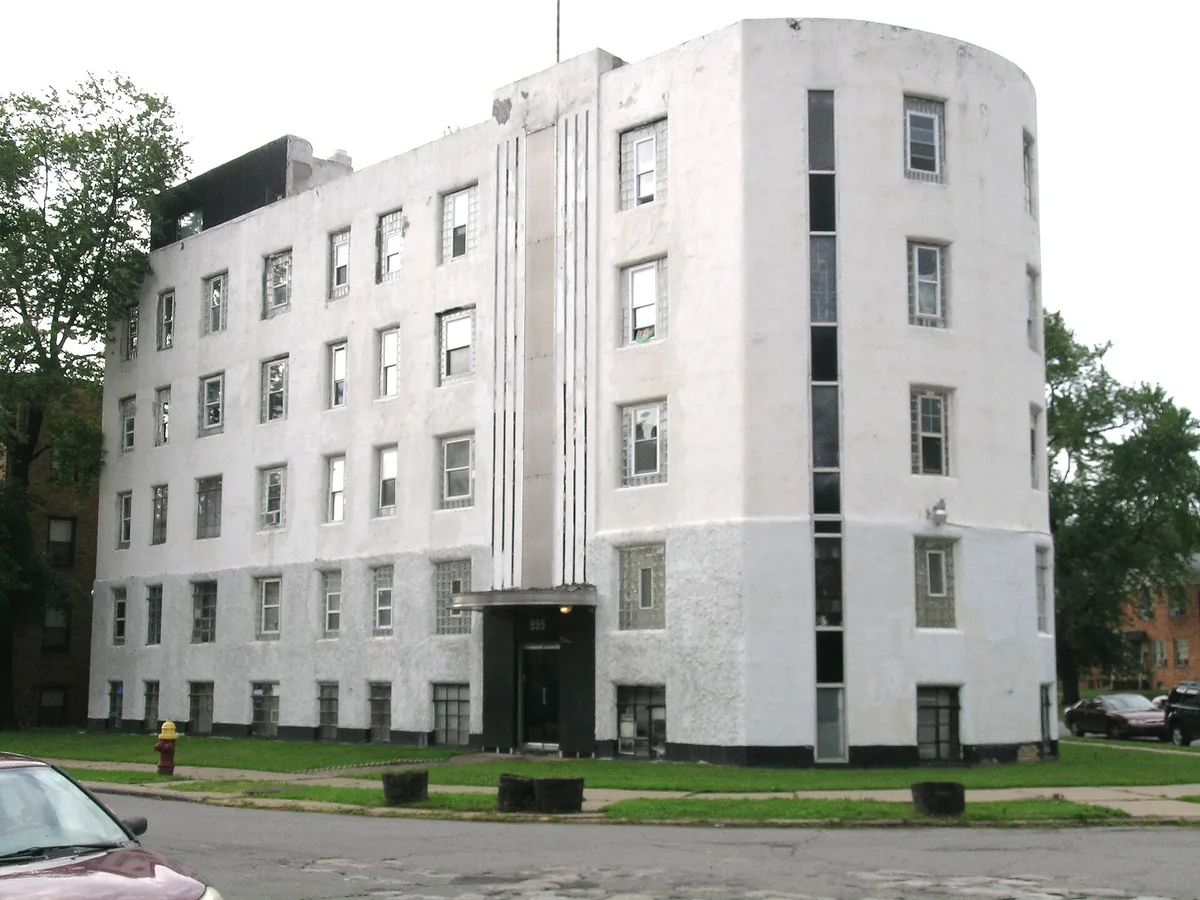
Big Early-1900s Houses North of Midtown
New Center is a historic district just north of Midtown, along Woodward and Grand Boulevard. Its stock comes largely from the Fisher Building era. Large early-1900s homes stand alongside older apartment buildings and commercial blocks. The houses are the feature of the district. They are big, they were built to an older pattern of heating and service, and many have been divided, extended or updated in stages over a long life. Each stage can leave its mark on the shell of the house.
A rodent job in a large old house is a longer inspection than in a small newer one. There are more rooms, more pipe runs, a larger attic and a deeper basement, and more places where an old opening can sit unnoticed behind storage.
Coal Chutes, Stone Foundations and Shared Systems
Stone foundations are common in this stock, and they need a careful check. Deep stone joints can lose mortar over time, leaving gaps at or below ground level that a mouse can use and a rat can work at. Where the foundation meets steps, a porch or an old coal chute, the join is a particular place to look. A coal chute door, the low metal door that once took coal deliveries into the basement, often remains in place. If its frame has rusted or its door has warped, it can leave a gap straight into the basement at foundation level.
Inside, long pipe and heating runs pass through walls and floors, and each penetration is a possible gap. A large attic can shelter mice that entered at a roof edge, heard only at night in the room below. In older apartment buildings, a shared basement and shared chases mean one route can serve several units.
City-wide figures explain why this list is long. About 34.8 percent of Detroit housing units were built in 1939 or earlier, and New Center's homes sit firmly in that older group. An inspection here should expect old openings and check for them, rather than assume the shell is as it was built.
Have a big old house or block in New Center? Call to book a full inspection of its foundation, coal chute and attic.
Call (313) 555-0100From Inspection Map to Follow-Up in a Large Old House
The job begins with a full inspection, inside and out, covering the stone foundation line, the coal chute, the basement, the attic and the roof edges. Findings are written up as an entry-point map with photos. In a large house that document matters, because it lets the owner phase the work if needed, dealing first with active entry points and then with openings that are a risk but not yet in use, with each item accounted for.
Clearing deals with the rodents already inside, and entry-point sealing closes the map in a planned order. A stone joint may need a masonry repair backed by mesh. A coal chute may need metal work. A roof edge may need a screened cover that keeps a vent working. After a large attic has been cleared and sealed, attic cleanup can remove droppings and nesting from the space, in that order, so the cleaned attic is not reopened by the same route.
A follow-up visit then rechecks the sealed points and looks for fresh signs, with timing that takes the season into account. Mice move indoors from September to February, and first fall frost in Detroit averages October 24, so a house sealed in early autumn should be checked as the colder weeks arrive. Jobs booked through this site are fulfilled by an independent, Michigan-licensed pest control operator. This site connects customers with that operator and does not itself perform treatments.
Services for New Center Homes and Blocks
For most houses here, the core services are the inspection, clearing for mice or rats, and sealing. Work on indoor mice fits the common pattern of signs in a kitchen, a pantry or a ceiling void below the attic. Rat clearing fits signs at basement, foundation or rear yard level, where burrows or larger droppings appear. In an apartment building, the same services are planned around shared areas, and access to the basement and common storage needs arranging before the visit.
Commercial blocks along Woodward and Grand Boulevard add storage, waste and delivery areas to the list. In every case, day-to-day prevention supports sealing afterwards. Detroit's BSEED does exterior baiting only and does not exterminate inside homes.
Problems and pain points in New Center
In a large old house, scratching in the ceiling at night is often the first sign, heard in a bedroom below a big attic. Droppings in a pantry or basement add to the unease, because the house has many rooms and long pipe runs where damage can stay hidden. Owners worry about chewed wires in wall voids and droppings and nesting left in an attic they rarely open.
A short quote can be hard to trust in a house this size. If the coal chute, a stone joint or a roof edge is missed, the work will not hold, and people fear paying and then being left with a partial map. A full entry point map with photos, and a follow-up in the colder weeks, lets an owner phase the work and check each item.
Common entry points in New Center homes
| Housing feature | Where rodents get in | What closes it |
|---|---|---|
| Stone foundations | Deep joints that have lost mortar at or below ground level | Masonry repair bonded into the joint, backed by mesh |
| Coal chutes | Rusted frame or warped door into the basement | Metal work on the chute and sealed frame edges |
| Big attics and roof edges | Gaps at roof edges, gable gaps and vents | Screened covers that close gaps and keep vents working |
| Long pipe and heating runs | Gaps where pipes pass through walls and floors | Seal each penetration with tight chew-proof fill |
| Shared basements and chases in flats | One route in common areas serving several units | Seal basement and chase openings and record them as common area items |
| Steps, porches and foundation joins | Open joins where steps or a porch meet the foundation | Seal the join and repair the adjoining mortar |
Signs to check in New Center homes
- Scratching in a ceiling below the attic at night
- Droppings or nesting in the attic, basement or pantry
- Open stone joints low on the foundation line
- Coal chute door with rust or a warped frame
- Gaps at roof edges or around attic vents
- Disused vents and old openings behind basement storage
Rodent services in New Center
Every New Center job is part of the wider service area covered across Detroit, and each service below is described in full on the main Detroit rodent control page.
Rodent Exclusion Detroit MI
Exclusion means sealing every entry point: coal chutes, block and stone foundations, sill plates, porch lines and garage gaps, closed with materials rodents cannot chew through. The step that stops new animals using the same routes.
Rodent Inspection Detroit MI
A full check of kitchens, attics, basements, crawl spaces, garages and the alley line, ending with an entry-point map and photos. Start here when you have signs but no certainty about the animal or the route in.
Attic Rodent Cleanup Detroit MI
Cleanup of droppings, nesting and odours left in an attic after rodents are cleared, with a plain account of when insulation can stay and when it has to come out.
Frequently Asked Questions
Are stone foundations harder to seal than block ones?
They take more care. Stone joints are deeper and less even than block joints, so a gap may need mesh backing as well as a masonry repair that bonds into the joint. The inspection checks the full foundation line inside and out, because a small opening outside can lead into a wider void in a stone wall.
Why does a large old house need such a long inspection?
Size and age together lengthen the list. A large house has a longer foundation, a bigger attic, more pipe runs and more old openings, including a coal chute and disused vents, than a small house. Each one needs checking and recording, so the owner gets a complete map instead of a partial one that misses a route.
We hear scratching in the ceiling. Where did they get in?
Scratching below a large attic often means mice are using the attic space, entered at a roof edge, a gable gap or a wall chase from below. The inspection checks the attic itself, the roof line and the routes down into the walls, so sealing closes the entry point and not only the room where the sound is heard.
Our building is flats with a shared basement. How is that handled?
The shared basement, chases and common storage are checked as part of the building, alongside the flat where signs were found. The map separates openings inside a flat from openings in common areas, so the building owner and the resident can each see which items are theirs to arrange.