Rodent Exclusion (Sealing Every Entry Point)
Exclusion means sealing every entry point a rodent can use. A mouse can work through a gap about the width of a pencil. A rat needs a larger opening, but it can widen a soft or damaged edge by gnawing. Traps and bait deal with rodents that are already inside. Sealing deals with the route they used to get in, and with the route the next ones would use.
Many homeowners ask how to get rid of rodents permanently. The honest answer is that sealing is the mechanism that makes a result last, and no outcome should be promised as a word alone. A house stays closed only if every usable opening is found and closed with the right material, and new damage is repaired later. That is why rodent proofing detroit mi work is judged by the inspection and the materials, not by a promise.
Sealing has limits. It does not clean an attic, remove droppings, or clear rodents already living inside. Those are separate jobs, and a good plan says which job comes first. If rodents are active inside now, the usual order is to map the entry points, clear the animals inside, and seal in a sequence that traps nothing in a wall. The exact order for your house is set at the inspection.
Detroit Houses: Entry Points an Inspection Should Check
Detroit housing is old, and age shapes this work. About 86 percent of Detroit residential structures were built before 1970, according to the City of Detroit NRSA plan for FY2025 to 2029, based on ACS 2020 data. About 34.8 percent of housing units were built in 1939 or earlier, according to ACS 2022 5-year data. Only about 1 percent of homes were built after 2010, according to the same City NRSA plan. About 72 percent of housing units are single-family homes, counting attached homes, according to ACS 2022 5-year data.
Old does not automatically mean open. It does mean an inspection has a longer list to check: aging mortar, sill plates that can rot where they meet a foundation, forgotten utility openings, and seams where additions, porches and garages meet the house.
Detroit code gives this work a legal echo. Section 8-15-105 of the Detroit City Code requires buildings and exterior property to be kept free of rodent harborage and infestation, and the code framework includes a duty to prevent re-infestation after a problem is cleared. Sealing is how a homeowner meets the practical side of that duty.
One local term needs a plain definition. A Michigan basement is a dug-out former crawl space, often about 5 to 7 feet deep, and often with stone walls. Where a house has one, its stone joints, old openings and utility lines belong on the inspection checklist.
Coal Chutes and Old Utility Openings
Many older Detroit houses were heated with coal. The coal chute door, a metal door low on the foundation wall, was how coal was delivered into the basement. Few chutes are used now, but the door and frame remain on many houses. Frames rust, doors warp, and the seal around the frame can fail, leaving a gap at the low level where a rat travels along a foundation line.
Old utility openings raise the same issue. Gas, water, sewer, electric and cable lines enter through holes in a foundation or wall. When a line is replaced, moved or removed, the old hole is sometimes left open or filled with a soft material. An inspection checks each penetration, including ones hidden behind a porch, a deck or stored items in the basement. Each open or soft-filled hole gets sealed around the line, or closed fully if the line is gone.
Chimney bases, cleanout doors and disused vents belong in this group too.
Block and Stone Foundations
Detroit foundations include concrete block, poured concrete, brick, and stone. Each ages in its own way. Block foundations can open at mortar joints, especially at corners and at the line where the block meets the ground. Stone foundations, including the stone walls of a Michigan basement, have deeper joints that can lose mortar over time and leave gaps a mouse can use.
An inspection checks the foundation line inside and out: cracked or missing mortar, gaps where steps or porches meet the wall, and holes left by old pipes. A gap that looks small outside can open into a wall void inside.
Foundation sealing has to match the material. A mortar gap needs a masonry repair that bonds to the joint, often backed by mesh where the gap is wide. A hole around a pipe needs a tight, chew-proof fill. Painting over a gap, or pushing in a soft fill a rat can pull out, does not close it.
Sill Plates, Porch Lines, and Garage Gaps
The sill plate is the wood member that sits on top of the foundation and carries the framing above it. Where it has rotted, shrunk or been damaged, a gap can run along the top of the foundation wall. Siding or trim can hide that gap from outside, so an inspection checks it from the basement or crawl space side as well.
Porches create their own routes. A porch open underneath, or enclosed with gapped lattice or panels, gives rodents a sheltered space against the house wall, close to any opening into the basement or a wall void. The inspection should check the wall behind and under the porch, the steps, and any gap where the porch roof meets the house.
Garages are a common weak point. A garage door that does not meet the floor evenly leaves a corner gap, and a worn side-door threshold does the same. Where the garage is attached, that gap can become a route into the house wall or attic. Openings at eaves, loose soffit panels and gaps around roof vents can also let mice reach the attic, which is why sealing work and attic cleanup after an infestation often need to be planned in the right order.
Ready to close the gaps mice and rats are using? Call to book an inspection and get your entry points mapped before any sealing work starts.
Call (313) 555-0100The Sealing Process, From Entry-Point Map to Verification
The process starts with a full inspection, inside and out. To book that check, see what a rodent inspection covers. The technician looks for active signs, droppings, rub marks, gnawing, nesting, and the openings listed above. Findings are recorded as an entry-point map, a list or diagram that ties each opening to its location and the repair it needs.
That map does two things. First, it sets the scope: sealing two pipe holes is a different job from repointing a foundation joint, closing a coal chute, fitting a door sweep and sealing a porch line. Second, it gives you something to check the finished work against: each item accounted for as sealed, repaired, or explained.
Next comes the quote, in writing, based on the map. Then the sealing work itself. Openings are usually sealed in coordination with any trapping underway, so animals inside can be cleared and animals outside lose their route back in. Large masonry repairs may need to cure before a final check. Mesh and metal work should sit tight, with no loose edge a rodent can work at.
The last step is verification. The technician rechecks the sealed points, looks for gaps hidden by the first round of work, and confirms the map is complete. A working vent is never blocked solid. It gets a screened cover that keeps rodents out and keeps the vent working, and that should be stated plainly.
Good rodent exclusion detroit mi work leaves you with a closed list, not a vague assurance. You should be able to walk the house, point to each place on the map, and see what was done there.
Materials That Actually Keep Rodents Out
Material choice is where many sealing jobs fail. Rodents gnaw. A material that is easy to chew, pull, or push out of a gap may close a hole for a week and then reopen it. The table below sets out the materials used for sealing entry points in Detroit homes, what each one is for, and its limits.
| Material | What it seals | Limits to know |
|---|---|---|
| Galvanized steel mesh and hardware cloth | Foundation gaps, porch openings, vent covers, wide joints backed by mortar | Must be fixed tight with no loose edges. The mesh opening must be small enough to block a mouse. |
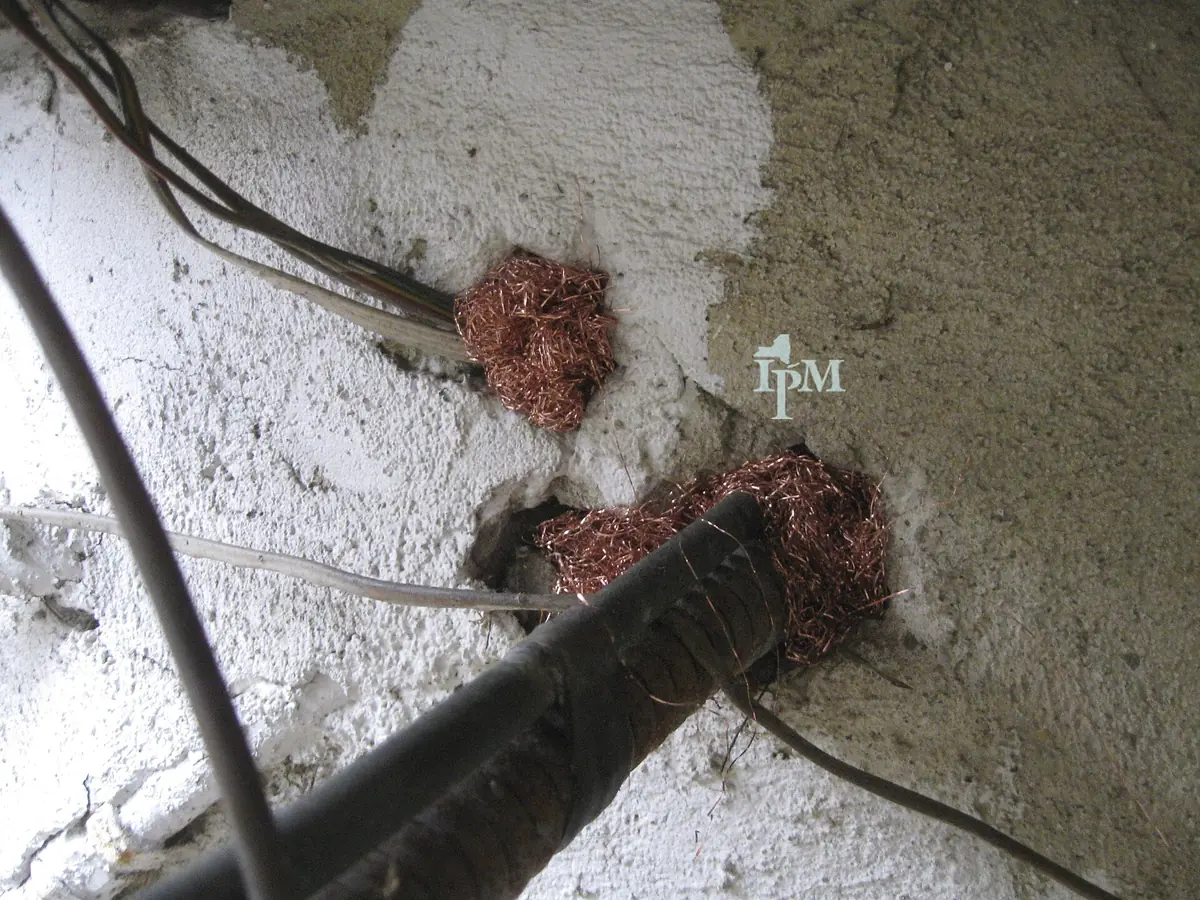
| Copper mesh | Small gaps around pipes and wires, irregular holes | Works as a packed fill that rodents dislike gnawing. It should be set tight and, where needed, held with a suitable sealant or mortar. |
| Sheet metal and flashing | Coal chute doors, larger flat gaps, door and sill edges | Needs a firm fix and sealed edges. Thin metal left loose at a corner can be bent back. |
| Mortar and masonry patch | Block and stone foundation joints, brick gaps, holes in masonry | Needs sound bonding and time to cure. Wide gaps often need mesh behind the patch so the repair has backing. |
| Steel wool with sealant | Very small, low-pressure gaps as a short-term or backed fill | On its own it can rust or be pulled out. It is not a stand-alone long-term seal for an active entry point. |
| Expanding foam on its own | Air gaps in non-rodent work | Foam alone is not a rodent seal. Rodents can chew through it. Where foam is used for insulation or air sealing, it needs a chew-proof layer or backing at a rodent entry point. |
The foam point matters because foam is the most common DIY fix. It fills a gap neatly and looks finished, but if a rodent can reach it, foam by itself will not hold. Foam can sit behind mesh or metal as a backing or air seal, as long as the rodent-facing layer is one it cannot get through. Door sweeps and garage seals follow the same rule: a sweep should meet the threshold along its full length, and a torn or uneven garage seal leaves the exact corner opening a mouse uses.
Why Traps and Bait Alone Keep Failing
Trapping and baiting reduce the rodents inside. They do not close the house. If the entry points stay open, new rodents can replace the ones removed, and the cycle starts again. Homeowners often describe this as a game of setting traps over and over. The traps are working. The house is still open.
The pressure is not constant through the year. For indoor mice, the risk rises when nights drop into the 40s and 30s and mice look for warmer routes inside. A gap that let in one mouse in a mild week can be used by more as the weather turns. That is a reason to seal when a problem is found, rather than keep resetting traps and wait.
Food and shelter around the house also matter, and those habits are covered on the page about day to day prevention habits for Detroit homes. Habits and sealing are different jobs. Habits reduce what attracts rodents to the property. Sealing closes the house itself. A tidy yard with an open coal chute still lets rodents in.
There is also a simple cost logic. Repeat visits that never close the entry points can run for a long time. Sealing is a larger single job, and its value is that it changes the condition that kept causing the calls.
The Poison-Free Path Through Trapping and Sealing
Exclusion work itself uses mesh, metal, mortar and covers. It does not depend on poison. For many homeowners, that is the point. They want the house closed and the animals inside cleared, without bait placed where children or pets spend time, and without the risk that follows a poisoned rodent dying in a wall.
That risk is worth naming plainly. A rodent that dies inside a wall or ceiling void can create a strong smell that lasts for days, and removing it can mean locating the carcass and sometimes opening the wall. You can read about that job on the page for removing a dead rodent from a wall or ceiling. Avoiding poison as the first move reduces the chance of facing that problem.
A poison-free path usually runs like this. The entry points are mapped. Traps are placed inside where activity is, along runs and near entry routes, and checked on a set cycle. As inside activity clears, the openings are sealed in the planned order. Monitoring continues for a short period after sealing, so any remaining activity is dealt with by trapping, not by leaving bait out.
This path takes planning. Traps need checking, and sealing needs to be timed so no animal is shut inside a wall void. Raise it at the inspection so the plan, the trap checks and the sealing order are agreed before work starts. Rodent exclusion services detroit homeowners choose for this reason should be able to explain, in plain words, how the inside animals will be cleared and how each opening will be closed.
Why This Job Is Quoted Only After an Inspection
Sealing cannot be priced honestly from a phone description. Two houses on the same street can need very different work. One may have two open pipe holes and a torn garage seal. Another may have a rusted coal chute, a crumbling stone joint, a rotted sill section and a porch line that needs mesh.
A large figure quoted by phone, before anyone has inspected the house, is a warning sign: the price was set without knowing the scope. The safer order is to inspect first, map the entry points, then give a written quote that matches the map.
The factors that drive the price are these: the number and size of entry points; the materials each point needs, masonry work costing differently from mesh or a door sweep; access, including ladder work at eaves, tight crawl space work or work behind a porch; any repair that has to come first, such as replacing a rotted sill section; and the size of the house and garage. Full ranges for rodent work, set out as market ranges, are on the page that explains how rodent control pricing is worked out in Detroit. Your figure depends on your map.
If you want rodent exclusion detroit mi work scoped for your house, start with the inspection. Bring any photos you have of gaps, droppings or damage, and note where you have heard or seen activity. That helps the technician check the right places first.
Detroit Houses: Entry Points an Inspection Should Check
- Coal chute door and frame low on the foundation wall, including rust, warping and a failed seal around the frame
- Old utility openings for gas, water, sewer, electric and cable lines, including holes left open or filled with a soft material
- Block and stone foundation joints, including the stone walls of a Michigan basement and gaps where steps or porches meet the wall
- Sill plate where it sits on top of the foundation, checked from the basement or crawl space side as well as outside
- Wall behind and under the porch, the porch steps, and any gap where the porch roof meets the house
- Garage door corners where the door does not meet the floor evenly, and a worn side door threshold
- Chimney bases, cleanout doors, disused vents, and openings at eaves, soffits and roof vents
Materials That Actually Keep Rodents Out
| Material or method | Where it is used | What defeats it or its limit |
|---|---|---|
| Copper mesh packed tight | A small hole around a pipe | It fits a simple small gap. DIY sealing often fails where the gap is in masonry or where an opening is missed elsewhere. |
| Mortar repair, often backed by mesh where the gap is wide | Cracked or missing mortar in block or stone foundation joints | The repair has to bond to the joint. Painting over a gap does not close it. |
| Mesh and metal work | Holes around pipes and other openings that need a tight, chew-proof fill | It should sit tight, with no loose edge a rodent can work at. |
| Expanding foam behind mesh or metal | As a backing or air seal behind a rodent-facing layer of mesh or metal | Foam by itself will not hold if a rodent can reach it. A rodent can chew, pull or push it out of a gap. |
| Door sweep and garage seal | A door that misses its threshold and a garage door that does not meet the floor evenly | A sweep should meet the threshold along its full length. A torn or uneven garage seal leaves the corner opening a mouse uses. |
| Screened cover | A working vent | A working vent is never blocked solid. The cover has to keep rodents out and keep the vent working. |
Related Services
Rodent Inspection Detroit MI
A full check of kitchens, attics, basements, crawl spaces, garages and the alley line, ending with an entry-point map and photos. Start here when you have signs but no certainty about the animal or the route in.
Rodent Prevention Detroit MI
The habits and checks that keep a clear house clear: food and trash habits, alley and garage harborage, the vacant house next door, and openings to watch before cold nights arrive.
Attic Rodent Cleanup Detroit MI
Cleanup of droppings, nesting and odours left in an attic after rodents are cleared, with a plain account of when insulation can stay and when it has to come out.
Frequently Asked Questions
How do rodents get into a house?
Rodents get into a house through gaps and openings in the shell, including coal chute frames, holes around pipes and wires, cracks in block or stone foundations, rotted sill plates, porch gaps, and garage doors that do not seal at the corners. A mouse can use a gap about the width of a pencil, and a rat can gnaw a soft edge wider. An inspection checks each of these places and records the openings it finds.
What is the most effective rodent control?
The most effective approach combines clearing the rodents already inside with sealing every entry point so new ones cannot get in. Traps or bait alone can reduce numbers for a while, but activity often returns if the openings stay open. Sealing with chew-proof materials, checked after the work is done, is the step that changes the condition that caused the problem.
Can I seal entry points myself?
You can seal some simple gaps yourself, such as a small hole around a pipe packed tight with copper mesh, or a door sweep replaced along its full length. DIY sealing often fails where the gap is in masonry, where foam is used on its own, or where an opening is missed behind a porch, in an attic, or along a sill plate. If activity keeps returning after your own sealing, an inspection can map the points that were missed.
Does exclusion use poison?
Exclusion itself is sealing work, and it uses mesh, metal, mortar and covers, not poison. Rodents already inside are usually cleared with traps that are placed and checked as part of the plan. Any separate bait decision should be explained before work starts, so you know what will be used in your house and where.
How do I get rid of rodents permanently?
Sealing is the mechanism that makes a result last, and no outcome should be promised as a word alone. A house stays closed only if every usable opening is found and closed with the right material, the rodents already inside are cleared, and new damage is repaired later. That is why this work is judged by the inspection and the materials, not by a promise.