The Smell Timeline: What to Expect Day by Day
A dead rodent in a hidden space is usually found by smell first and by sight second. The animal may be inside a wall cavity, above a ceiling, under floorboards, in attic insulation, or in a crawl space. Because the carcass is out of view, the first job is location, not cutting.
If a live rodent is also moving in the house, that needs separate handling. See the same-day and emergency page for what counts as an urgent live-animal situation.
The timeline below is a general pattern. It varies with the size of the animal, temperature around the void, air flow, and how enclosed the space is. A mouse is a smaller source than a rat, so a mouse smell is usually shorter.
- Day 1. The smell may be faint or absent. It is often noticed first in one room, on one wall, or near a vent or outlet.
- Days 2 to 4. The smell builds and becomes easier to place. It is often strongest when the house is closed up or when warm air moves through the void.
- Peak period. For a mouse, the strongest period commonly falls within the first week. For a rat, the peak can last longer because there is more material to break down.
- Decline. Once the carcass dries out, the smell fades in stages. A mouse smell often fades over one to two weeks in total. A rat smell can take several weeks.
- Lingering odour. A faint smell can remain if fluids reached insulation, wood, or dust inside the void. That is one reason removal and cleaning are worth doing instead of only waiting.
Smell is typically worse in warm weather, because warmth speeds up decay. Waiting does work eventually in the sense that decay finishes, but it leaves the carcass, any insects it attracted, and any soiled material in place for the full period.
How a Carcass Is Located Before Anything Is Opened
Location work starts with the smell pattern. The technician notes which room is strongest, which wall or ceiling area carries the smell, and whether it is present at floor level, at outlets, or near vents and pipe openings. Smell that is strong in one spot and weak a few feet away points to a nearby void. Smell spread evenly through several rooms more often points to an attic or shared ceiling space.
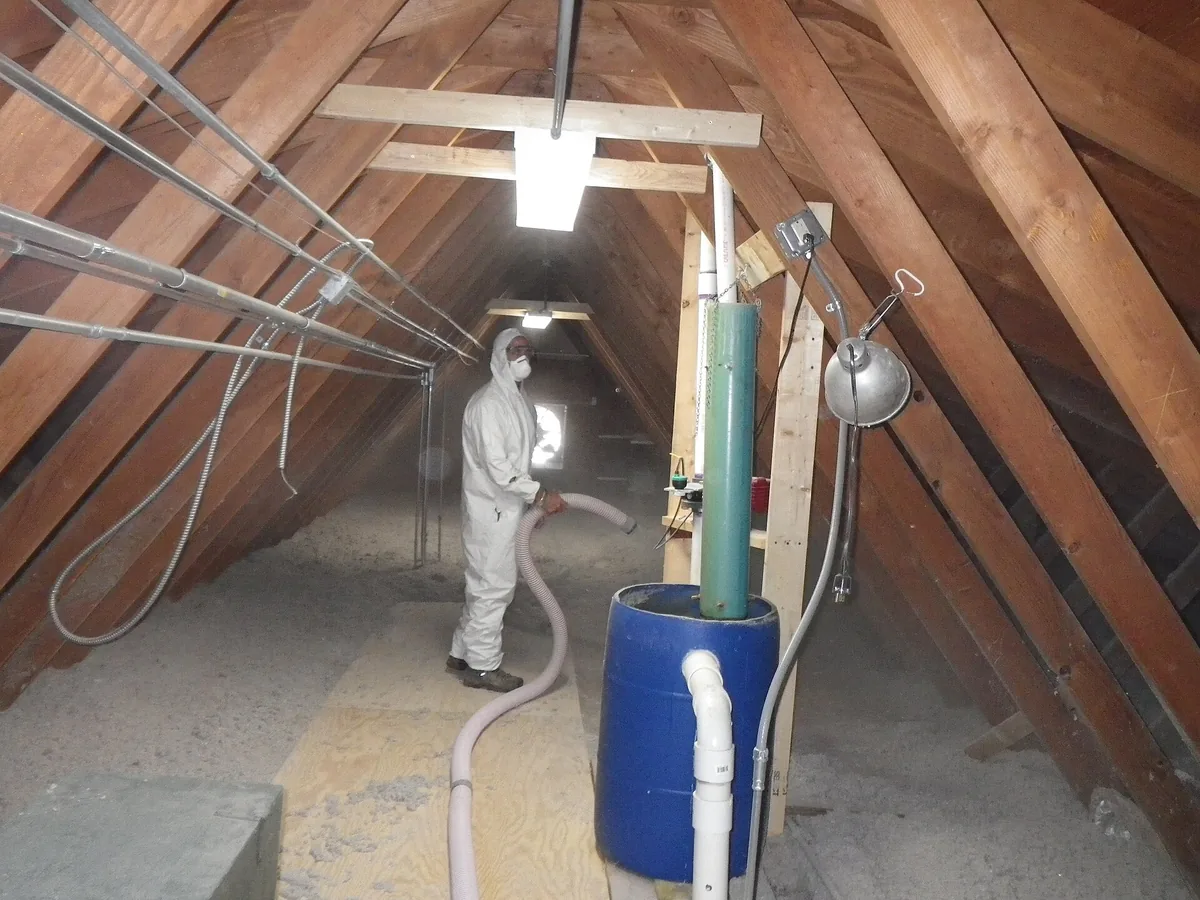
Accessible spaces are checked before any wall is considered: the attic, crawl space access, basement ceiling areas, and spaces around plumbing and utility runs. Many carcasses are reachable from one of those spaces, even when the smell is noticed inside a finished room.
Detroit housing makes this pattern matter. About 86% of Detroit residential structures were built before 1970, according to the City of Detroit NRSA plan using ACS 2020 data, and 34.8% of housing units were built in 1939 or earlier, according to ACS 2022 data. Older houses tend to have more connected voids and pipe chases. An inspection works through those voids in order, from most accessible to least accessible, before a cut is discussed.
Common locations found in this kind of work include:
- Wall cavities below an attic, where an animal fell and could not climb out.
- Ceiling voids under a bathroom or kitchen, near pipe runs.
- Attic insulation, away from the access hatch.
- Crawl space and basement ceiling areas, near ductwork.
- Chimney chases, soffits, and boxed-in utility spaces.
Guessing and opening the wrong section helps no one. The aim of this stage is to narrow the location to the smallest likely area first, so that dead rodent removal from walls, where it is needed, involves one small opening in the right place rather than several openings in the wrong places.
A smell that is getting stronger usually means the source is still in place. Call to describe where the smell is strongest and when it started, and to arrange for the location to be checked and the carcass removed.
Call (313) 555-0100When a Wall Has to Be Opened - and When It Does Not
A wall does not have to be opened in every case. If the carcass is in an attic, a crawl space, or another space with existing access, it can be removed through that access with no cutting at all. Opening is considered only when the location work points to a sealed void and there is no other way to reach the carcass.
When an opening is needed, the usual approach is a small cut at the narrowed location, low on the wall or behind a section that is easier to patch. The carcass and any directly soiled material are removed through that opening. The opening is kept as small as the access allows.
Patch expectations should be set before any cut is made. Carcass removal and cleaning of the immediate area are the core of the job. Closing the opening can range from a simple patch to full drywall and paint work, and that finishing work is not always part of the same job. Confirm what is included before you agree to the opening.
Why This Often Happens After Poison Is Used
Poison works away from the place where it is set. A rodent feeds, then travels back into the structure before it dies. That travel often ends inside a wall void, a ceiling, or another enclosed space the animal used as a route or shelter. When that happens, the result is a carcass in a place no one can reach without location work, and a smell problem that lasts for days or weeks.
Trapping works differently. A trapped animal is found at a known location, at a trap check, and can be removed the same day it is found. That difference is mechanical, not a slogan: a method that leaves the animal free to move after it has taken effect cannot control where the animal ends up.
This page does not claim any Detroit or Michigan rule that bans poison use. No such rule was found in the city and state sources checked for this site. The point here is practical. If poison has already been used and a smell has started, the immediate job is removal and cleaning. After that, the longer answer is to seal them out so it does not happen again, paired with trapping at known locations rather than a method that can leave the next carcass inside a wall.
Cleaning and Sanitation After Removal
Removal is only part of the job. Fluids and soiled material in insulation, dust, or wood around the spot can keep producing odour after the carcass is gone.
Sanitation after removal usually covers the immediate site: removing soiled insulation or debris, wiping or treating hard surfaces the carcass contacted, and bagging the removed material in sealed bags so it leaves the house without spreading contamination to living areas.
Some tasks stay with the homeowner. General room cleaning, washing soft furnishings that picked up the smell, and repainting after a wall patch are household tasks. Ventilating the room helps once the source is out, and it works far better after removal than before it.
If droppings or nesting are also found in the attic or another area during the visit, that is a related but separate job. See rodent droppings cleanup for how that wider cleaning is handled.
What Shapes the Work Involved
No two removal jobs take the same work. The scope of dead rodent removal detroit mi depends on a short list of factors that can only be settled once the location is known:
- Location and access. A carcass in an open attic is a short job. A carcass in a sealed wall void takes location work and may need a small opening.
- Size and number. A single mouse is a smaller job than a rat, and more than one carcass in different voids extends the work.
- How long it has been there. A carcass found early leaves less soiled material behind than one that has been in place through its full decay period.
- Sanitation needed. Soiled insulation or debris at the site adds removal and cleaning time.
- Follow-on work. Sealing entry points is separate from removal. It is the step that lowers the chance of a repeat, and it is quoted as its own job.
Because those factors change the work, this page does not list a price for the job. For how removal fits into overall pricing, the variables that move a quote, and what a written quote should show, see the rodent control cost guide. Any figure given before the location is known would be a guess, and a guess helps no one once the real location turns out to be harder or easier to reach.
How a Carcass Is Located Before Anything Is Opened
- Note which room is strongest, and which wall or ceiling area carries the smell
- Note whether the smell sits at floor level, at outlets, or near vents and pipe openings
- Check the attic, crawl space access and basement ceiling areas before any wall is considered
- Check spaces around plumbing and utility runs
- Work through voids in order, from most accessible to least accessible, before a cut is discussed
- Check common spots, including wall cavities below an attic, ceiling voids near pipe runs, attic insulation, and chimney chases and soffits
- Narrow the location to the smallest likely area first, so any opening is in the right place
When a Wall Has to Be Opened, and When It Does Not
| Approach | How it works | When it is used | Limits |
|---|---|---|---|
| Smell tracing | The smell pattern is noted by room, by wall or ceiling area, and by height, including floor level, outlets, vents and pipe openings. Smell strong in one spot and weak a few feet away points to a nearby void | As the first step, before anything is opened | Smell spread evenly through several rooms more often points to an attic or shared ceiling space, so tracing narrows the area rather than removing the carcass |
| Removal through existing access | Accessible spaces are checked first, including the attic, crawl space, basement ceiling areas and spaces around plumbing and utility runs, and the carcass is removed through that access | When the carcass is in a space with existing access, even if the smell is noticed inside a finished room | No cutting is needed in these cases, but the approach only works where there is a way in. A sealed void cannot be reached this way. |
| Small wall opening as a last resort | A small cut is made at the narrowed location, low on the wall or behind a section that is easier to patch, and the carcass and any directly soiled material are removed through that opening | Only when the location work points to a sealed void and there is no other way to reach the carcass | The opening is kept as small as the access allows. Closing it can range from a simple patch to full drywall and paint work, and that finishing work is not always part of the same job. |
Related Services
Rodent Droppings Cleanup Detroit MI
Safe handling and sanitation for droppings in attics, kitchens and garages, with guidance on how much is reasonable to clean yourself and when the amount or the place makes it a professional job.
Attic Rodent Cleanup Detroit MI
Cleanup of droppings, nesting and odours left in an attic after rodents are cleared, with a plain account of when insulation can stay and when it has to come out.
Rodent Exclusion Detroit MI
Exclusion means sealing every entry point: coal chutes, block and stone foundations, sill plates, porch lines and garage gaps, closed with materials rodents cannot chew through. The step that stops new animals using the same routes.
Frequently Asked Questions
How long does a dead mouse smell?
A dead mouse smell often builds over two to four days, peaks within the first week, and fades over one to two weeks in total. The exact length depends on temperature, air flow, and how enclosed the space is. A rat takes longer, often several weeks, because there is more material to break down.
Can you find it without opening the wall?
Often, yes. Location work follows the smell pattern and checks accessible spaces such as the attic, crawl space, and basement ceiling first, and many carcasses are reached that way. A small wall opening is used only when the evidence points to a sealed void with no other access.
Is the smell dangerous?
The smell signals decaying material inside the structure, which is not hygienic to leave in place. The main concerns are bacteria at the carcass site, insects drawn to it, and direct contact with the carcass or soiled material, so the area should not be handled without gloves. Ventilate the room, keep food preparation away from the affected area, and seek medical advice if anyone develops symptoms they are worried about.
What does removal cost?
Cost depends on where the carcass is, whether a wall opening is needed, and how much sanitation the site requires. No price is set here because the location decides the work involved. See the cost guide for the factors that shape a quote.