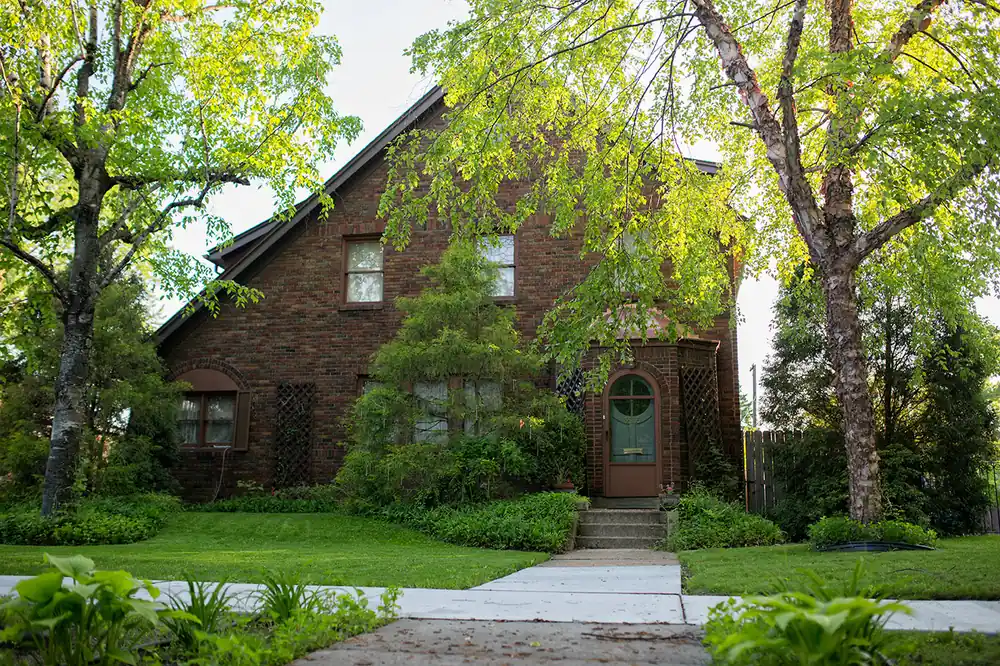
Brick Homes, Full Basements and the Basement Line
East English Village, on Detroit's east side near the Grosse Pointe border, is a neighbourhood of solid brick homes, many of them built in the 1940s, standing on tree-lined streets. The typical house is a brick colonial or similar two-storey form with a full basement, a front porch or stoop, and a garage behind the house reached from the street or the alley. It is settled, kept-up housing, and the rodent work here is mostly about the basement line and the second building on the lot.
The full basement is the first check. A 1940s basement holds the furnace, the water heater, laundry space and storage, and its walls carry every utility entry the house has: water, sewer, gas, electric and later cable lines. Each line passes through the foundation, and each hole is a possible gap if the packing around it has shrunk or a line has been replaced and the old hole left soft-filled. Sump lines, old cleanout fittings and the joints where basement walls meet the floor belong on the same list. Droppings in a basement usually sit along walls and behind stored items, which is why the inspection moves storage where needed rather than glancing at the open floor.
Above the basement, the brick shell itself is generally tight. The softer points are where other materials meet the brick: the sill plate at the top of the foundation, porch junctions, window wells with loose covers, and the roofline where soffits and vents sit under mature trees.
The Garage Behind the House and the Grounds Around It
The older garage stock behind East English Village houses is the second building every visit should cover. A detached garage from the same era as the house has its own foundation line, its own door seals and often a side door with a worn threshold. Garages store the things rodents use: seed, pet food, stored cushions, cardboard and firewood. A mouse population can live in a garage through the summer, noticed only as droppings on shelves, and then move to the house when nights cool. Mice move indoors from September to February across Detroit, and a heated house twenty feet from an active garage is the obvious destination.
Mature landscaping completes the picture. Established shrubs against the foundation hide the lowest part of the wall from view, which hides both gaps and burrows. Dense ground cover along a fence line gives rats a covered run between the alley, the garage and the house. None of this calls for clearing a garden. It calls for checking behind the planting, keeping growth cut back a short distance from the foundation so the wall line can be seen, and storing food items in the garage in sealed hard containers.
Outdoor rat activity in Detroit peaks from June to October, and the first fall frost averages October 24. For this neighbourhood, that sets a practical rhythm: garage and grounds checked in the warm months, basement and shell checked before the indoor season.
In East English Village and finding droppings in the basement or garage? Call to book an inspection and get both buildings checked.
Call (313) 555-0100From Inspection to Sealing in East English Village
The visit opens with a full inspection covering both buildings, house and garage, plus the lot lines between them. Findings are recorded as an entry-point map with photos: each foundation gap, each utility hole, each garage seal fault, each burrow. You get the map before any work is quoted, and jobs booked through this site are handled by an independent Michigan-licensed operator.
Clearing is then set by where activity actually is. A house with mice in the basement and kitchen runs needs mouse trapping and monitoring placed along those runs and checked on a cycle. A garage with its own activity is trapped at the same time, not left as a reserve population. Where rats are using the grounds and entering at the foundation, clearing the animals already present runs alongside the outdoor checks so the sealing that follows is not closing an active route with animals still inside the shell.
Sealing closes the list the map produced. Entry-point sealing on a 1940s brick home usually means utility holes repacked with chew-proof material, foundation joints repointed where mortar has opened, window well covers refitted, and garage doors and side doors resealed at the floor line. A follow-up visit rechecks each point and looks for fresh signs. Between visits, day to day prevention habits carry the outdoor side: trash carts closed, garage food stored sealed, growth kept off the foundation line. No figure is quoted before the inspection, because the difference between a tight house with one open pipe hole and a house plus garage with several faults is the whole scope of the job.
Problems and pain points in East English Village
In a settled brick home, droppings in the basement or kitchen feel out of place, and scratching overhead at night raises the question of how long activity has gone unnoticed. With a full basement below and a rear garage behind the house, signs in one place may start in another.
Homeowners also worry about hidden damage in wall voids and about paying for house only work that leaves a garage population in place. The answer in this stock is a map that covers both buildings before any work is quoted, a written quote from that map, and a follow up visit that rechecks each sealed point.
Common entry points in East English Village homes
| Housing feature | Where rodents get in | What closes it |
|---|---|---|
| Full basement utility entries | Gaps around water, sewer, gas and electric lines, and soft filled holes left by replaced lines | Utility holes repacked with chew proof material and old holes closed |
| Basement wall and floor joints | Open joints where basement walls meet the floor and around sump lines and cleanout fittings | Joints sealed and fittings closed as part of the basement line check |
| Sill plate and porch junction | Gaps where the sill plate meets the brick and where the porch or stoop joins the house | Junctions sealed at the foundation line and porch joint |
| Window wells | Loose window well covers at the basement line | Window well covers refitted and secured |
| Detached rear garage | Worn door seals, side door threshold gaps, and its own foundation line faults | Garage doors and side doors resealed at the floor line and foundation gaps repaired |
| Mature shrubs against the foundation | Hidden gaps and burrows behind dense planting at the lowest part of the wall | Growth cut back a short distance so the wall line can be inspected and repaired |
Signs to check in East English Village homes
- Droppings along basement walls and behind stored items
- Old utility holes from replaced lines in the basement
- Droppings on garage shelves or near stored seed and pet food
- Worn garage door seals and side door thresholds
- Loose window well covers at the basement line
- Dense ground cover hiding the foundation and fence line runs
- Scratching in walls or ceilings as nights cool in fall
Rodent services in East English Village
Every East English Village job is part of the wider service area covered across Detroit, and each service below is described in full on the main Detroit rodent control page.
Rodent Exclusion Detroit MI
Exclusion means sealing every entry point: coal chutes, block and stone foundations, sill plates, porch lines and garage gaps, closed with materials rodents cannot chew through. The step that stops new animals using the same routes.
Rodent Inspection Detroit MI
A full check of kitchens, attics, basements, crawl spaces, garages and the alley line, ending with an entry-point map and photos. Start here when you have signs but no certainty about the animal or the route in.
Mouse Control Detroit
Ongoing control for mice in attics, walls and pantries when one round of shop traps keeps failing. Built on trapping and monitoring, with the entry gaps behind the problem part of the plan.
Frequently Asked Questions
Why does the garage need its own inspection if the problem is in my house?
Because the garage is older stock on the same lot, close to the house, storing food and nesting material. Mice can live there unnoticed and move to the heated house from September onward. Trapping the house alone usually means the problem returns, so both buildings are checked and cleared together.
What should I check in my full basement before the visit?
Note where droppings sit, especially along walls and behind storage, and whether any utility line has been replaced or moved. Old holes from replaced lines are a common finding in 1940s basements. You do not need to empty the basement. The inspector records each penetration along the walls.
Shrubs hide my foundation. Do they have to come out?
No. Planting stays. It does need cutting back enough that the foundation line can be inspected and any gap repaired. Dense growth against the wall hides gaps and burrows and holds cover against the house. A short clear margin along the wall is enough.