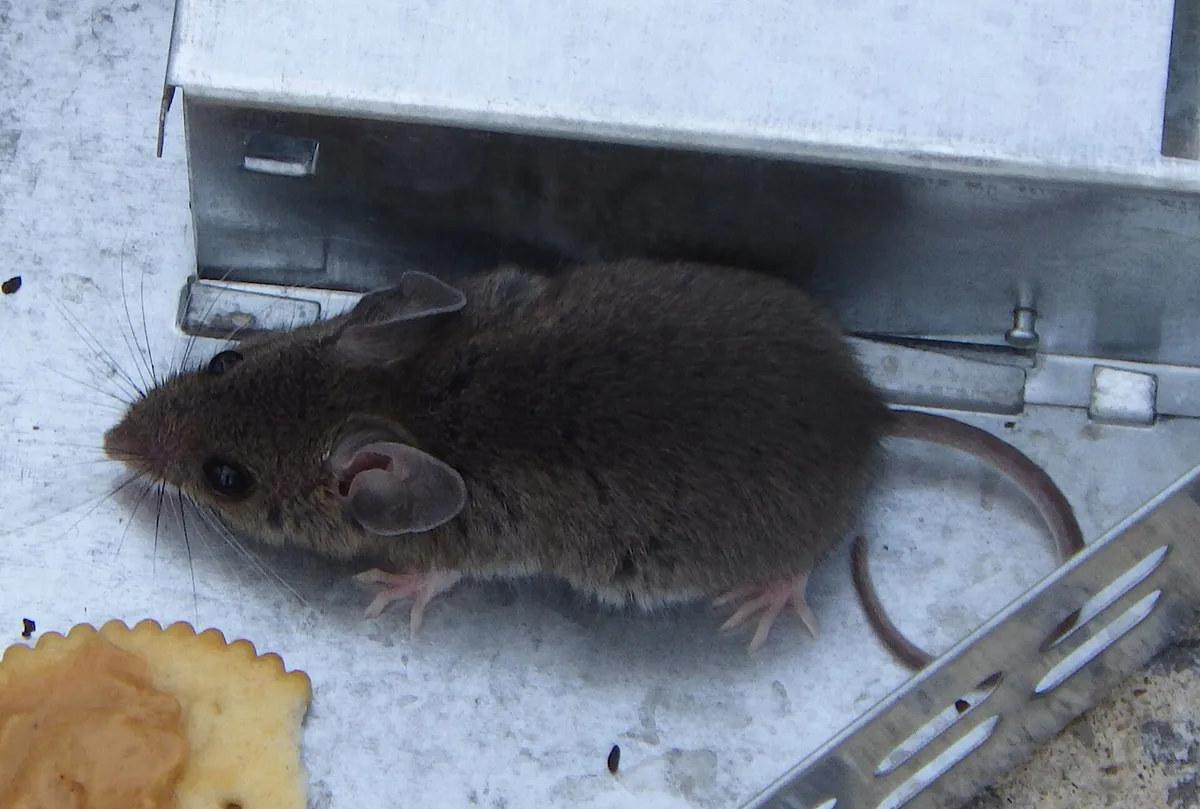
Mouse Control That Ends the Endless Trap Game
Most calls for mice control detroit mi begin in the middle of a loop. A trap catches a mouse, the trap gets reset, and a week later there is scratching again, or fresh droppings along the same run. Homeowners describe it as a game of setting traps over and over again, with no point where the problem is actually finished. The traps are usually working. The programme around them is what is missing.
The droppings tell the same story. When droppings show up in the pantry, under the sink and along the basement wall at the same time, the house has an active route, and mice are travelling it every night. Catching one mouse on that route changes nothing about the route itself. Control means working on the route as well as the mice using it.
A control programme runs in a set order. It starts when you get the entry-point check done, so the gaps mice are using are found and written down. Then a trap plan is set along the runs where activity was found, not in random corners. Checks follow on a set cycle, with fresh bait and a record of what each trap has done. When inside activity clears, the entry points are closed, so the next group of mice cannot follow the old route in.
- Find the entry points and the runs mice are using.
- Set a trap plan against those runs, with each placement logged.
- Check on a set cycle, refresh bait, and move placements as activity shifts.
- Close the entry points once inside activity has cleared.
That order is the difference between a programme and a pile of traps. A single visit can catch mice. Only the full sequence, ending with the house closed, gives the result a reason to hold.
What a Real Control Visit Actually Does
This page publishes the visit checklist because the loudest complaint in this market is about visits that changed nothing. Homeowners have reported traps checked but bait never changed, visit after visit, while the mice carried on. A visit you cannot see the substance of is hard to judge, so here is what a real control visit should do, item by item. Ask to see the record for your house.
- The technician walks the inside runs and the outside wall line, and notes any new droppings, gnawing or nesting found since the last visit.
- Every trap and bait placement is opened and inspected, not just looked at from a distance.
- Catches are removed, and traps that have fired are reset or replaced.
- Old bait is taken out and fresh bait is put in. Bait that has sat for weeks goes stale, and mice pass it by.
- The amount of bait taken at each placement is noted, because that shows where mice are feeding now.
- Placements are moved when activity has shifted to a different run or room.
- New gaps are added to the entry-point list, and sealing work is scheduled or referred on.
- You are told the count in plain terms: catches so far, placements still active, and the date of the next check.
Placement matters as much as the trap itself. In mouse trapping detroit work, traps go along walls, behind appliances and beside the holes mice use, set so a mouse travelling its usual run meets the trigger end first. A trap sitting in the middle of a room, with bait from last month still in it, is decoration. That record, kept visit by visit, is what separates mouse control detroit work from a quick trap drop.
The checklist also protects you when a visit goes well. If catches fall to zero and bait stops being taken, the log shows it, and the sealing step can be planned with some confidence. If activity moves instead of falling, the log shows where it moved to, and the plan changes on evidence rather than on a guess.
Hearing scratching at night or finding fresh droppings in the morning? Call to book the entry-point check and get a control programme built around your house.
Call (313) 555-0100Where to Look When Mice Keep Showing Up Indoors
Mice indoors follow food, warmth and cover, and the same rooms come up again and again. The kitchen and pantry sit at the top of the list: crumbs behind the stove, pet food left down overnight, and bags in low cupboards all feed a mouse without it crossing an open floor. The space under the sink matters because pipes pass through the cabinet floor and the wall, and those holes are often wider than the pipe.
Wall voids and the spaces above ceilings give mice covered travel routes between rooms, which is why scratching can seem to move around the house. Basements and utility areas give them quiet corners near warmth, around furnaces and water heaters, with stored boxes to nest in. An attached garage can feed mice on stored seed or pet food and still connect to the house through gaps around doors and shared walls. For a fuller room-by-room check, you can compare the signs by location before you call.
Detroit housing stock makes this search longer than it would be in a new suburb. About 86 percent of Detroit residential structures were built before 1970, according to the City of Detroit NRSA plan for FY2025 to 2029, based on ACS 2020 data. About 34.8 percent of housing units were built in 1939 or earlier, according to ACS 2022 5-year data. About 72 percent of housing units are single-family homes, counting attached homes, according to the same ACS 2022 data. Older houses have had more decades to open gaps at pipe holes, sill plates and porch lines, and a single-family house has more outside wall for mice to test.
One question comes up on almost every call: is it one mouse or many? Seeing one mouse usually means more are travelling the same route out of sight, because mice are shy, mostly active at night, and quick to learn a safe path. A single droppings find in one spot points to light activity. Droppings in several rooms, renewed after cleaning, point to an established group, and the control plan should be sized for the group, not for the one mouse you saw.
When Nights Turn Cold and Mice Move Indoors
Indoor mice follow a cold-season curve. The busy indoor period runs from September into February, and the move indoors begins when nights turn cold, when temperatures drop into the 40s and then the 30s and the first frosts arrive. Mice that spent the warmer months around garages, woodpiles and foundation lines start testing the house for a warm route in, and a gap that was ignored all summer becomes an entry point.
Detroit winters give that pressure time to build. The January normal high is 32.3 degrees Fahrenheit and the normal low is 19.2 degrees, according to NOAA 1991 to 2020 normals for the Detroit area, and the city averages about 45 inches of snow a year on the same normals. Most mouse control in detroit mi call-outs follow that pattern: the first cold nights bring the first calls, and activity keeps going while the cold holds.
Winter is an active indoor season for mice. Two common beliefs get this wrong, and Michigan State University guidance has debunked both. Mice do not hibernate. They stay active all winter, breeding and feeding indoors where warmth and food are steady. Cold weather outdoors does not kill the mice already inside your walls, because inside is exactly where they went to escape it.
So a quiet spring does not always mean the problem ended. It can mean the pressure eased and the surviving mice stayed in the voids. The practical move is to use the colder months to run the control programme while activity is easy to track indoors, and to close entry points before the next cold season tests them again.
Why Mice Return After a Short Fix
Mice return when the reason they came in is still there. The most common reason is an open entry point. Traps can clear every mouse inside a house, and if the gap at the pipe hole or the sill plate is still open, new mice from outside can follow the scent of the old runs within days. The owner experiences this as the same problem coming back. On the facts, it is a new group walking through the same door.
Short fixes fail in quieter ways too. Bait left unchanged goes stale and stops drawing mice, so an empty trap line looks like success while activity continues one room over. Traps set in the wrong places, away from the runs, catch nothing and prove nothing. Food left within reach, from pet bowls to unsealed pantry bags, keeps a route worth travelling even while traps sit on it.
The in-home half of the fix is control plus closing. Clearing the mice inside is the first half. The second half is sealing every entry point, so the route itself is gone and the result has something holding it up. That is why detroit mouse control work has to include the sealing step in the plan from the start, even when the sealing happens after the trapping. A programme that ends at the last catch is a programme that will likely be restarted.
There is an honest limit to state here. Control inside your house cannot change pressure from outside it, and a house with many gaps may need the sealing done in stages. What control can do is clear the inside activity, show you exactly which openings matter, and close them in an order that keeps new mice from replacing the ones removed.
What Changes the Work Your Home Needs
No two mouse jobs are the same size, and the factors below are what change the work. The number of entry points found at inspection is the biggest one: two pipe holes are a short sealing list, while a long list across the foundation, porch and garage makes a larger job. The level of activity matters too, measured by how many rooms show droppings and how fast they return after cleaning. Access changes time on site, since tight crawl spaces, finished basements and stored rooms all slow the search. The number of check visits the activity needs, and whether sealing can follow straight away or has to be staged, complete the picture.
On price, this page stays short on purpose. Prices here would be a guess before anyone has inspected your house, and a figure set without the entry-point list behind it is not a figure worth having. The full picture, set out as market ranges with the drivers that move them, sits on the page that explains how rodent control pricing is worked out in Detroit. Your own figure should be set out in writing after the inspection, matched to the list of work your house actually needs, before any work starts.
If your situation is a single, defined job rather than an ongoing programme, the routes differ, and it is worth reading how a one-time hire for mice is scoped before you decide which fits. Programmes suit houses where activity is spread out, entry points are many, or checks need to run while sealing is staged. A defined job suits a small, contained problem. Either way, the inspection findings should drive the choice.
If you want mouse control detroit help scoped to your house, start with the entry-point check and bring what you have: photos of droppings, the rooms where you hear scratching, and a note of when the sounds happen. That gives the first visit a head start and gets the programme built around your house rather than around a guess.
What a real control visit actually does
- Walk the inside runs and the outside wall line, and note any new droppings, gnawing, or nesting found since the last visit
- Open and inspect every trap and bait placement, not just look at it from a distance
- Remove catches, and reset or replace traps that have fired
- Take out old bait and put in fresh bait
- Note the amount of bait taken at each placement, to show where mice are feeding now
- Move placements when activity has shifted to a different run or room
- Add new gaps to the entry point list, and schedule or refer on sealing work
- Tell you the count in plain terms: catches so far, placements still active, and the date of the next check
Mouse methods compared
| Method | How it works | Best for | Limits |
|---|---|---|---|
| Trapping on runs | Traps go along walls, behind appliances, and beside the holes mice use, set so a mouse travelling its usual run meets the trigger end first | Mice travelling known runs in kitchens, pantries, and wall lines | A trap in the middle of a room, away from the runs, catches nothing and proves nothing |
| Bait placements | Each placement is opened and inspected on the visit, old bait is taken out, fresh bait is put in, and the amount taken is noted | Showing where mice are feeding now and keeping placements working | Bait that has sat for weeks goes stale, and mice pass it by |
| Exclusion sealing | Entry points are closed once inside activity has cleared, so the next group cannot follow the old route in | Ending the cycle of new mice arriving through the same gaps | A programme that ends at the last catch, without closing entry points, will likely be restarted |
Related Services
Rodent Exclusion Detroit MI
Exclusion means sealing every entry point: coal chutes, block and stone foundations, sill plates, porch lines and garage gaps, closed with materials rodents cannot chew through. The step that stops new animals using the same routes.
Rodent Prevention Detroit MI
The habits and checks that keep a clear house clear: food and trash habits, alley and garage harborage, the vacant house next door, and openings to watch before cold nights arrive.
Attic Rodent Cleanup Detroit MI
Cleanup of droppings, nesting and odours left in an attic after rodents are cleared, with a plain account of when insulation can stay and when it has to come out.
Frequently Asked Questions
What is the 5 day mouse rule?
The 5 day mouse rule is a monitoring rule of thumb: after the last catch or fresh sign, traps stay set and get checked for five straight days. Five clear days, with no new droppings, no catches and no sounds, is the point where the activity is treated as cleared for now. One quiet night proves little, because mice can avoid a new trap for several nights before they trust it. Keep the entry points on the sealing list even after a clear run, so the result holds.
What should I do if I see a mouse in my house?
Watch where it goes, because the direction it runs usually points at the gap or void it is using. Keep children and pets out of that room, move open food into sealed containers, and check the cupboards and wall lines nearby for droppings. Do not handle the mouse or sweep dry droppings around. Then set traps along the wall it travelled, or call for an entry-point check so the route gets closed as well as cleared.
How long until the mice are gone?
There is no honest fixed number of days, because it depends on how many mice are inside, how many entry points are open, and how well placements match the runs. Many homes need several check visits spread over a few weeks, with catches falling as the programme goes on. The inspection should give you a realistic window for your house and the signs that will show progress. If signs stay level instead of falling, the plan should change, not just repeat.
Are the baits safe around kids and pets?
No bait should be treated as safe for a child or a pet to eat, and any answer that skips that point is not straight with you. Safety in practice comes from placement: bait belongs in secured placements that children and pets cannot open or reach, set away from food and play areas, and you should be shown where each placement is. Where a room cannot be made secure that way, trapping is the better tool for that room. Ask where bait would go in your house before work starts, and ask what will be used.