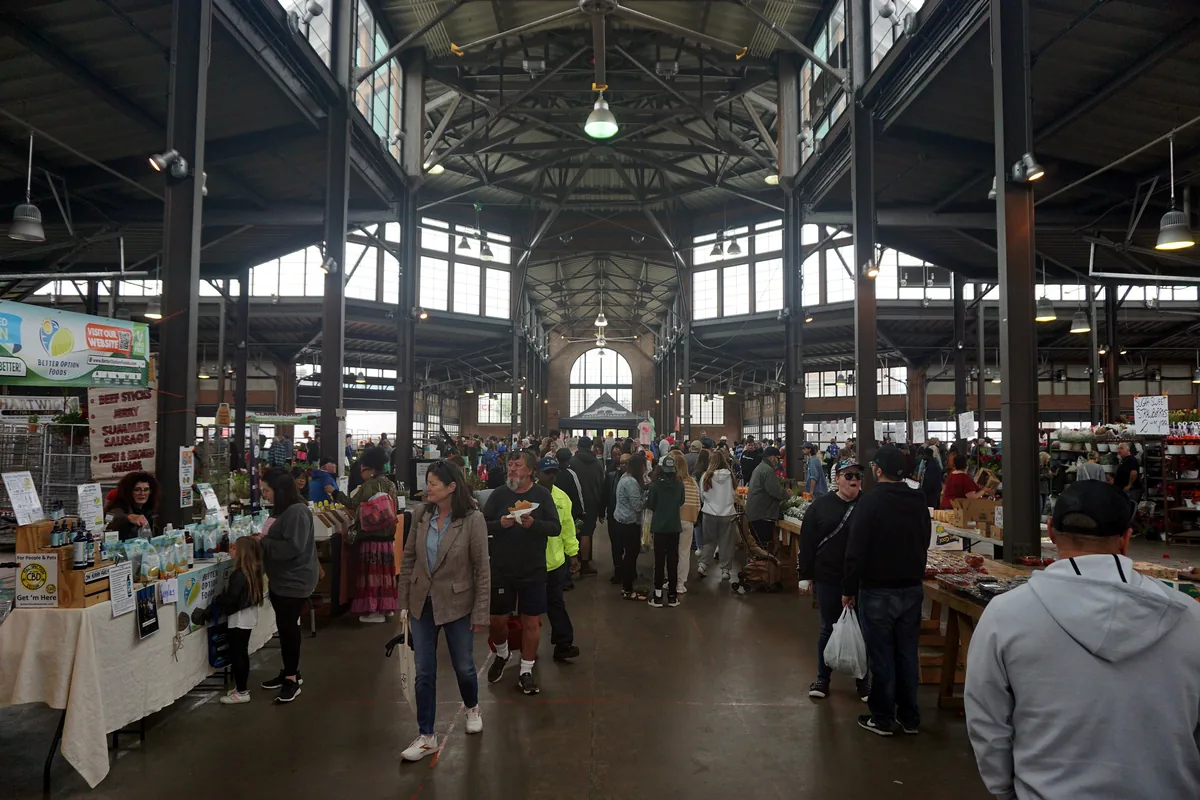
A Working Market District, Not Just a Shopping Day
Eastern Market is a 43-acre market district operating since 1891, with more than 150 food and specialty businesses, according to Detroit Historical Society figures. The market sheds, food storage and processing premises are the centre of it, with lofts and newer residential buildings around the edges. Rodent work here is therefore mainly commercial. The buildings handle food in quantity, deliveries arrive early, waste leaves in quantity, and storage rooms hold goods close to dock doors and service yards.
The residential edges matter too, because a loft beside a food premises shares walls and waste areas with it. But the starting question here is usually a business one: where does food arrive, where is it stored, where does waste wait, and what openings sit near those places?
Docks, Waste and Stored Goods: Where Pressure Builds
Food premises create a steady pattern. Loading docks open and close through the day, and a dock door that sits uneven at a corner leaves a gap at ground level. Waste and recycling areas, often built against a rear or side wall, give shelter close to any unsealed opening in that wall. Storage rooms and processing areas add cardboard, pallets and quiet corners where a rodent can nest near food without being seen in the public part of the premises.
The market sheds need a plainer description. A shed is an open or partly open structure, and it cannot be sealed in the way a closed building can. Work around the sheds is therefore about the closed premises that serve them, the stores, units and storage buildings where goods are kept overnight, and about waste handling and harborage around the shed area itself. Claiming a shed can be made rodent-proof by sealing would not be honest. Reducing shelter, waste build-up and routes into the closed buildings behind the sheds is the real work.
Older commercial shells add gaps around pipe entries, damaged mortar, old openings from a previous layout, and gaps under a rear door. An inspection has to check the food route and the building shell together.
Running a food premises or loft in Eastern Market? Call to book an inspection of your dock, waste and storage areas.
Call (313) 555-0100What Inspection and Sealing Look Like Around Food Premises
The visit starts with a full inspection timed, where possible, so the dock, waste area and storage rooms can be seen as they are used, not only when they are clean and empty. The technician maps droppings, rub marks and gnawing, and records each opening with photos. For a food business that map separates jobs the business can do itself, such as waste storage and pallet stacking, from building jobs that need sealing or repair.
Clearing is planned for rodents already inside, with placement explained in advance for a food setting. Entry-point sealing then closes the dock corner, pipe gaps and rear door edge with mesh, metal and masonry. A working vent is screened, never blocked solid. A follow-up checks for fresh signs.
For businesses, help for commercial premises is the service route that fits this district best. Jobs booked through this site are fulfilled by an independent, Michigan-licensed pest control operator. This site connects customers with that operator and does not itself perform treatments. The city role is limited here as well. Detroit's BSEED does exterior baiting and harborage enforcement only, and does not exterminate inside homes or business premises.
Services for Stalls, Stores and Nearby Lofts
A store, processing unit or restaurant in the district will usually need the inspection, the clearing and the sealing as one plan. Where rat signs appear around a dock, a waste area or a rear yard, rat clearing covers that side of the work. Where mice are found in a storage room, an office or a loft above a premises, work on indoor mice is the fitting service, again paired with sealing so the same gap does not refill the room.
Lofts on the edges should be checked with neighbouring premises in mind. A shared wall or waste area can carry rodents between a shop and a home. Longer term, day-to-day prevention covers storage and waste habits between visits.
No price is set out here, because a dock and storage unit is a different job from a single loft. The factors that drive a figure, and the market ranges used in Detroit, are set out in the guide to how rodent control pricing is worked out in Detroit. Your own figure follows from your inspection map.
Problems and pain points in Eastern Market
Finding droppings in a storage room or near stored goods is a hard moment for a food business. The stock looks clean on the surface, so owners worry about what has happened overnight in quiet corners among pallets and cardboard. In a loft at the edge of the district, scratching in a shared wall or droppings in a kitchen raise the same worry at home, with wiring and stored food out of sight.
Quotes are hard to judge when a dock, a waste area and an old shell all sit in one job. Owners fear paying for work inside the unit while the route at the rear door or in a shared waste area stays open, and then being left without a follow-up. A map that splits tenant tasks from owner repairs, with photos of each opening, keeps the plan honest.
Common entry points in Eastern Market homes
| Housing feature | Where rodents get in | What closes it |
|---|---|---|
| Loading docks | Gap where a dock door sits uneven at a corner | Repair the door edge and seal the corner |
| Waste and recycling areas | Unsealed openings in a rear or side wall next to bins | Seal wall openings and reduce shelter around bins |
| Storage and processing rooms | Gaps in the shell near stored goods and service entries | Seal shell gaps and clear nesting shelter in quiet corners |
| Older commercial shells | Gaps around pipe entries, damaged mortar and old openings from a previous layout | Seal pipe gaps, repair mortar and close old openings |
| Rear and service doors | Gaps under a rear door | Fit a tight door edge and seal the threshold |
| Lofts at the district edge | Shared walls and waste areas next to food premises | Check and seal shared wall gaps and waste area openings |
Signs to check in Eastern Market premises and lofts
- Droppings or rub marks in storage or processing rooms
- Gnawing on cardboard or pallets near stored goods
- Dock door with a visible gap at one corner
- Gaps around pipes where services enter the building
- Waste build-up or shelter close to a rear wall opening
- Signs in a loft that shares a wall or waste area with a shop
Rodent services in Eastern Market
Every Eastern Market job is part of the wider service area covered across Detroit, and each service below is described in full on the main Detroit rodent control page.
Rodent Exclusion Detroit MI
Exclusion means sealing every entry point: coal chutes, block and stone foundations, sill plates, porch lines and garage gaps, closed with materials rodents cannot chew through. The step that stops new animals using the same routes.
Rodent Inspection Detroit MI
A full check of kitchens, attics, basements, crawl spaces, garages and the alley line, ending with an entry-point map and photos. Start here when you have signs but no certainty about the animal or the route in.
Rodent Control for Restaurants Detroit
Work shaped for food premises: dumpster corrals, loading docks, dry storage and grease areas, with monitoring and records that support health inspections, and a plan for signs found just before one.
Frequently Asked Questions
Can the open market sheds be sealed against rodents?
No, not in the way a closed building can. A shed is open or partly open by design. The practical work is in the closed stores, storage and processing buildings that serve the sheds, and in waste handling and harborage around the shed area, so rodents have less shelter and fewer routes indoors.
Which areas of a food premises are checked first?
The dock and delivery doors, the waste and recycling area, food storage and processing rooms, and the points where pipes and services enter the building. Those are the places where food, shelter and a possible opening sit closest together, so signs and gaps there carry the most weight in the plan.
We run a stall but rent our storage unit. Who seals the building?
Sealing the shell of a rented unit, such as a dock door, a wall gap or an old pipe opening, is normally the building owner's work, while storage and waste habits inside the unit are the tenant's. An inspection map helps, because it lists each item by location so owner and tenant can divide the list clearly.
I live in a loft at the edge of the market. Is my job different?
The inside work is similar, but the inspection should also look at shared walls, shared waste areas and any service yard you share with a food premises next door or below. A route into a loft here can start in a commercial area, not only in the home itself.