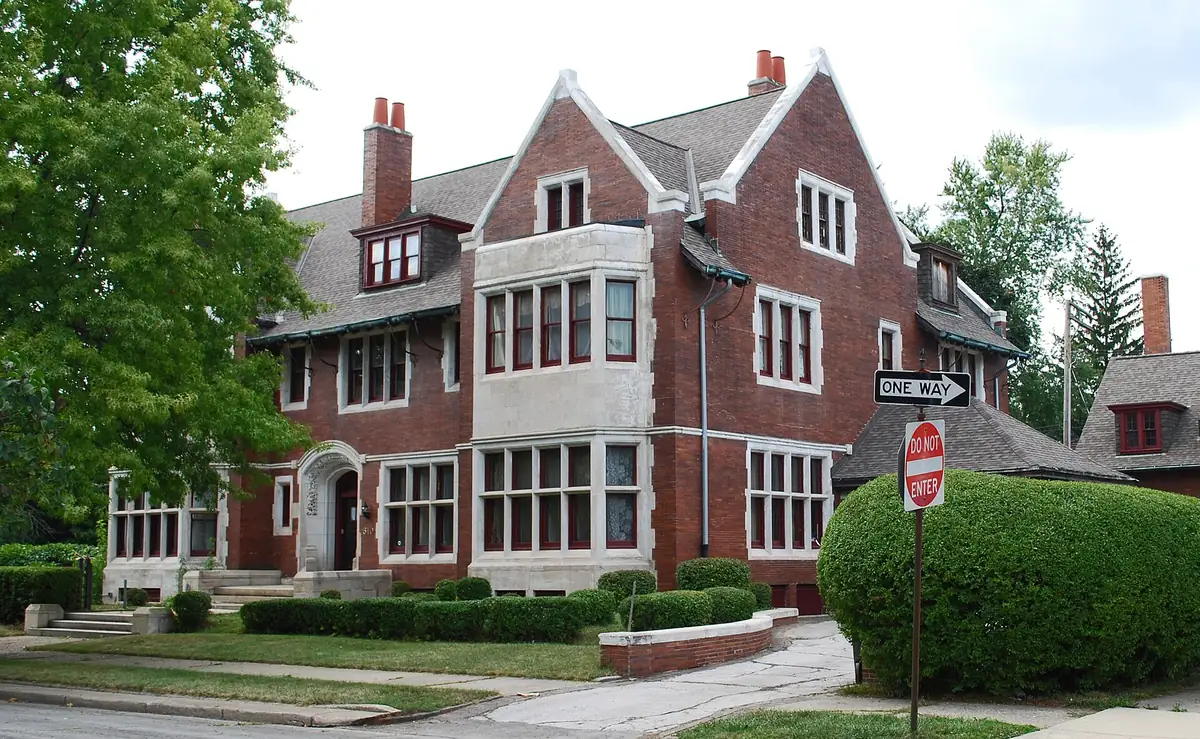
Large Houses, Long Checklists: Working at Boston-Edison Scale
Boston-Edison is a historic district of roughly 900 homes built mainly between 1905 and 1925, large houses on wide, tree-lined streets. Scale is the defining fact for rodent work here. A big house has a longer foundation line, more roof planes and junctions, more pipe runs, and more rooms where signs can sit unnoticed than a small bungalow. The method does not change. The checklist gets longer, and the inspection has to be systematic or the far end of the house, the third floor, the rear wing, the outbuilding, is exactly where the missed opening will be.
These homes were built before modern sealing practice and then altered for over a century. Heating changed from coal to gas or electric, plumbing was renewed in sections, wiring was added in waves. Each change passed lines through walls and foundations, and each retired system left something behind: a coal chute, a cleanout, a capped pipe, a chase that once carried heat or water and now carries nothing but air between floors. Old pipe chases are a recurring theme in this district. A chase is a vertical void, and a mouse that enters it in the basement can come out on any floor it passes.
None of this is a comment on how the houses are kept. The point is narrower: a shell built between 1905 and 1925 and adapted for a hundred years holds more legacy openings than a newer house, and finding them is a mapping job before it is anything else.
Big Attics and Carriage Houses
The attic of a Boston-Edison house is a room-sized space, often with flooring in part, storage in the rest, and runs of insulation, ducting and old wiring across it. Mice use attics as quiet living space above the heated rooms, travelling down wall voids to reach food. A large attic can hold nesting and droppings across several bays before anyone hears scratching below. Eaves, soffits and roof junctions under the district's mature trees are the usual entry level, which puts the roofline high on the inspection order.
Carriage houses are the second building on many lots here, set behind the main house. They were built for carriages and then cars, and many now serve as garages, workshops or storage. A carriage house has its own foundation line, wide doors that rarely seal tightly at the floor, and often an upper floor or loft. Rodents living in the carriage house are on the same lot, steps from the main house, and runs between the two buildings follow fences, walls and utility lines. A visit that inspects only the main house leaves half the property unchecked.
Coal-era openings complete the list. Chute doors, ash cleanouts, disused flues and old vent openings sit low on these houses, at the level rats travel. Each one is checked from inside and out, because a door that looks shut from the street can stand open at a rusted frame edge in the basement.
In Boston-Edison and hearing activity in a large attic or carriage house? Call to book an inspection and get the whole property mapped.
Call (313) 555-0100Mapping, Clearing and Sealing a Large Property
The visit starts with a full inspection run as a circuit: basement and coal-era fittings, foundation line, main floors, attic, then the carriage house and the lines between the buildings. Every opening and every sign goes onto an entry-point map with photos, floor by floor and building by building. On a property of this size the map is what makes the quote honest. Jobs booked through this site are handled by an independent Michigan-licensed operator, and the scope is quoted in writing from the map, not from a phone description of a large house.
Clearing follows the map. Trapping is placed where activity was found, which in these homes can mean the attic and a wall chase rather than the kitchen. Where an attic holds built-up droppings and nesting, attic cleanup is sequenced after clearing and sealing, so the cleaned space stays closed. If a smell points to an animal dead in a wall or ceiling void, removing a dead rodent is located and handled as its own step.
Sealing is the long list made physical: entry-point sealing across chute doors, chase openings capped at basement and attic level, foundation joints repaired, carriage house doors resealed at the floor, and eave and soffit gaps closed under the tree line. Work on the whole property is coordinated as clearing the animals already present first and closing the shell in the planned order, so nothing is sealed inside a void. Follow-up visits recheck the map item by item. With first fall frost averaging October 24 and mice moving indoors from September to February, a large house benefits from having its map made before that season rather than during it.
Problems and pain points in Boston-Edison
In a large house, signs can sit unnoticed for a long time: droppings across several attic bays, scratching over one bedroom, nothing heard at the far end of the house. That scale makes it hard to know if a problem is small and local or spread through voids between floors.
It also makes quotes hard to trust, because a phone description of a big house cannot carry the real list. Here the quote follows a floor by floor map with photos, attic and carriage house included, and follow up visits recheck the map item by item so the work does not end at payment.
Common entry points in Boston-Edison homes
| Housing feature | Where rodents get in | What closes it |
|---|---|---|
| Long foundation line | Open mortar joints along a long perimeter, including rear wings and porch junctions | Foundation joints repaired item by item along the full line |
| Coal chute and ash cleanout | Rusted frame edges on chute doors and cleanouts that look shut from outside but stand open in the basement | Chute doors and cleanouts refitted or closed with metal and sealed at the edges |
| Old pipe chases | Open chase voids that connect the basement to several floors | Chase openings capped at basement and attic level |
| Large attic under mature trees | Gaps at eaves, soffits and roof junctions at the usual entry level | Eave and soffit gaps closed under the tree line |
| Disused flues and old vent openings | Low openings left by retired heating and vent systems | Disused openings covered with metal or mesh and sealed |
| Carriage house | Wide doors that do not seal at the floor, its own foundation gaps, and loft access | Carriage house doors resealed at the floor and foundation line repaired |
Signs to check in Boston-Edison homes
- Droppings and nesting across attic bays
- Scratching over bedrooms from the attic or wall voids
- Open chase tops in the attic and chase openings in the basement
- Rusted coal chute and cleanout frames in the basement
- Gaps at eaves and soffits under mature trees
- Droppings in the carriage house or its loft
- Signs in third floor or rear wing rooms that sit unnoticed
Rodent services in Boston-Edison
Every Boston-Edison job is part of the wider service area covered across Detroit, and each service below is described in full on the main Detroit rodent control page.
Rodent Exclusion Detroit MI
Exclusion means sealing every entry point: coal chutes, block and stone foundations, sill plates, porch lines and garage gaps, closed with materials rodents cannot chew through. The step that stops new animals using the same routes.
Rodent Inspection Detroit MI
A full check of kitchens, attics, basements, crawl spaces, garages and the alley line, ending with an entry-point map and photos. Start here when you have signs but no certainty about the animal or the route in.
Attic Rodent Cleanup Detroit MI
Cleanup of droppings, nesting and odours left in an attic after rodents are cleared, with a plain account of when insulation can stay and when it has to come out.
Frequently Asked Questions
What is a pipe chase and why does it matter?
A pipe chase is the vertical void built around heating, plumbing or wiring runs. In a house of this age, chases were opened and reused as systems changed, and one open at the basement can connect to several floors. A mouse inside can travel the height of the house unseen, so chases are checked and capped.
There are droppings across a large attic. What is the order of work?
Inspect and map first, including eaves and soffit gaps. Then clear the animals by trapping. Then seal the openings. Cleanup of droppings and nesting comes last, after the attic is closed, so the cleaned space is not re-entered. Cleaning first usually means cleaning twice.
How is a job on a house this size quoted?
From the inspection map, in writing. The factors are the number and size of openings, the materials each needs, access, including ladder work at eaves and work in the carriage house, and any repair that must come first. Two houses on the same street can need very different lists.