The Honest Answer: What “Permanently” Really Requires
The word in this guide's title deserves a straight answer before any steps. No product, gadget or single visit makes a house mouse-proof by magic. A house is a shell of walls, pipes, vents and joints, and that shell changes over time: mortar cracks, wood shrinks, a storm loosens a vent cover, and a new gap opens.
What readers actually want is a result that holds: mice cleared, and no new mice following them in. That rests on three things together: a closed shell, sealed at every usable entry point in a material mice cannot chew through; food and shelter kept low around the house; and regular monitoring for fresh signs and new damage, so small openings get closed while they are small. Leave out any one of the three and the cycle tends to restart.
Detroit's housing stock makes the sealing part bigger here than in a newer suburb. About 86 percent of Detroit residential structures were built before 1970, according to the City of Detroit NRSA plan for FY2025 to 2029, based on ACS 2020 data. About 34.8 percent of housing units were built in 1939 or earlier, according to ACS 2022 5-year data. That means a longer list of seams and old openings to check.
Cold weather raises the pressure. Detroit's January normal high is 32.3°F and its normal low is 19.2°F, according to NOAA 1991 to 2020 normals for the Detroit area. When nights drop into the 40s and 30s, mice living outside look for warmer routes in, and a gap unused in a mild week can become a regular run.
The DIY Sequence That Actually Works
The trap game is familiar: set traps at night, catch a mouse, reset, catch another, and wonder why the supply never ends. The house is still open, and each catch is replaced through the same gap. The order of the steps below breaks that pattern: find the entry points, seal them, trap the mice already inside, then take away the food and shelter.
Find the Entry Points
Work in daylight with a torch and a notebook. Outside, walk the foundation line slowly and check where pipes, cables and vents pass through the wall, the corners of garage doors, gaps under doors, damaged mortar, and seams where porches and additions meet the house. On an older Detroit house, check the coal chute door low on the foundation wall too: a rusted or warped frame can leave a gap at exactly the level mice travel.
Inside, check the basement or crawl space, under the kitchen sink, behind the stove and fridge, around the water heater and laundry hookups, and at the attic hatch. Look for droppings, gnaw marks, dark rub marks along a run, and daylight showing through a gap. A mouse can use a gap about the width of a pencil, so small openings count. Write down every gap you find. That list is your sealing plan.
Seal Before You Trap
Seal the gaps on your list before you set traps inside. If you trap first while the house is still open, new mice can enter faster than you clear the ones inside. Once the shell is closed, the mice indoors are a fixed group, and trapping can finish the job.
Match the material to the gap. Pack small holes around pipes and wires tight with copper mesh. Cover wider gaps and vents with galvanised steel mesh or hardware cloth, fixed firmly with no loose edge. Use sheet metal or flashing on flat gaps and worn door edges, a door sweep where a door misses its threshold, and mortar for cracks in block, stone or brick, with mesh behind wide joints. Expanding foam on its own is the most common failed fix: it looks finished, but mice chew straight through it. Foam can sit behind mesh or metal as an air seal. Loose steel wool fails the same way: it rusts or gets pulled out.
Tick off each point as you close it. If the list involves high roofline work, crumbling masonry or a rotted sill plate, that is the deep end of this step, and it is the work covered by rodent exclusion work in Detroit homes. Sealing two pipe holes yourself and handing over a foundation repair is a reasonable split.
Trap Inside and Monitor
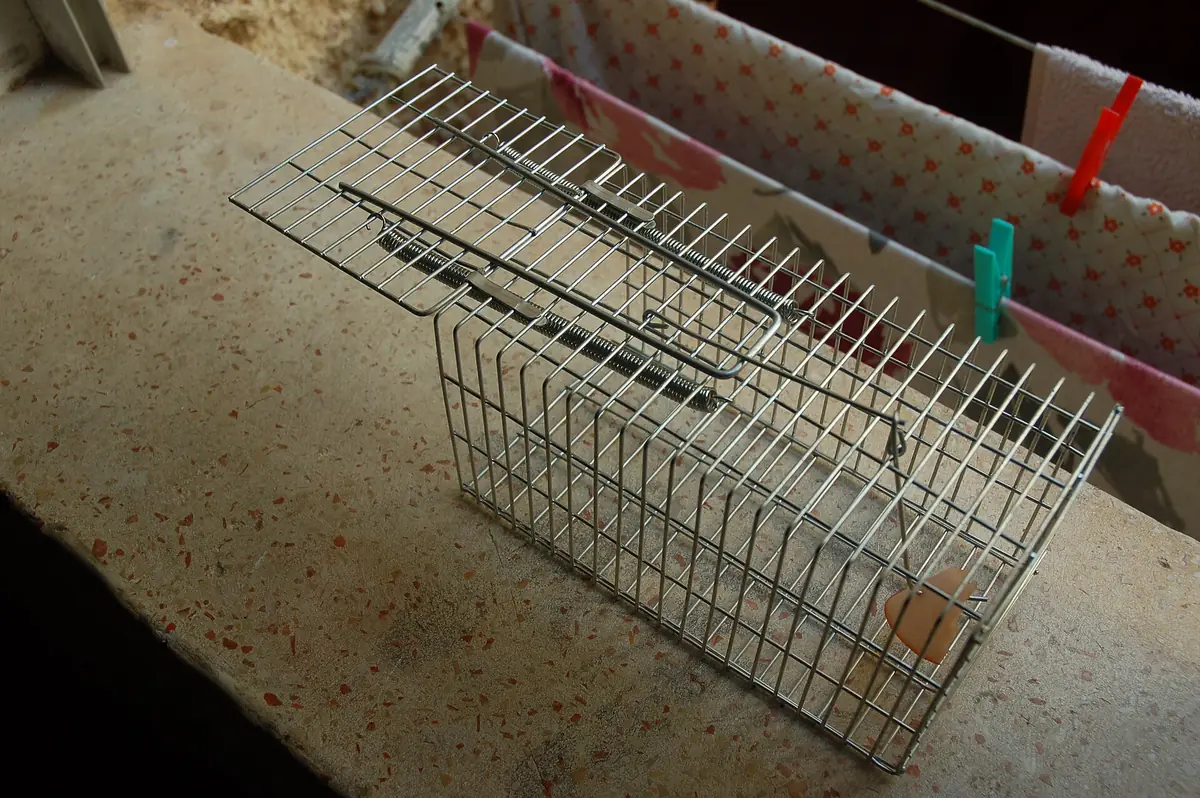
With the shell closed, set snap traps inside where the signs are: along walls and runs, behind appliances, in the basement near entry routes, and in the attic along joists. Mice travel along edges, so place traps against the wall with the trigger end facing it.
Check traps daily, remove catches promptly, and note where each catch happened. Keep monitoring after the catches stop: leave a few traps set, check for fresh droppings each week, and look again after storms or repair work. Judge progress by signs: no new droppings, no catches and no sounds across repeated checks is the pattern you are working toward. Keep traps in wall-side runs and covered spots, out of reach of children and pets.
Remove Food and Harborage
The last step lowers the pressure on everything you just sealed. Move dry food, pet food and bird seed into hard containers with tight lids. Stop leaving pet food down overnight. Around the house, clear shelter: wood piles and stored clutter against the foundation, dense overgrowth along the wall line, and debris under porches.
These habits do not close a single gap, and they cannot substitute for sealing. They reduce the mice living close to the house, which means fewer animals finding the one gap you missed. The habit side of this work, including alley and garage routines and what to check before cold nights arrive, is covered in more depth on the page about day to day prevention habits for Detroit homes.
Worked through the sequence and still seeing fresh signs? The sealing list may be longer than a weekend. Call to book an inspection and get every entry point mapped.
Call (313) 555-0100What Does Not Work - and Why
Most readers have already spent money on something that disappointed them. That spending is understandable: a mouse in the kitchen creates urgency, and these products are sold at that moment. They share one flaw: none of them closes a gap.
Plug-in ultrasonic repellers send out a high-pitched sound meant to drive mice away. Walls and furniture block it, so coverage inside voids and across a house is poor, and mice nesting in a warm house get used to a steady noise. Peppermint oil and other scents fade within days, and mice live in places with far stronger smells. A scent may mask a run briefly. It closes nothing.
Poison used on its own is the shortcut that causes the most trouble. It can kill mice, but it leaves the entry points open, so replacements arrive. A poisoned mouse often retreats into a wall or ceiling void to die, and the smell that follows can last for days while the carcass is located and removed. Removing it is a separate job, described on the page about removing a dead rodent from a wall or ceiling. Traps plus sealing avoid creating that problem in the first place.
One more belief leads people to wait instead of act: mice do not hibernate. They stay active and keep breeding indoors through the cold months. Waiting for warmer weather does not clear a house. The sequence above does the clearing, in any month.
Mice in the Attic: How to Get Rid of Them
The attic is its own case: the mice are above you, the signs arrive as sound first, and the entry points are often at the roofline rather than the foundation. Start at the attic hatch with a torch. Look for droppings along joists and wall top plates, and nesting in insulation corners. Check the likely entries from inside and out: gaps at eaves and soffits, loose vent covers, openings where pipes or wires rise through the top of the house, and joints where a porch roof or addition meets the main roof.
Seal the roofline gaps you can reach safely with mesh, metal covers or flashing, keeping working vents screened. Then set snap traps along joists and wall plates, close to the signs, and check them often, since unchecked catches create their own smell problem. Keep trapping until repeated checks show no fresh droppings and no new nesting.
Know the limits of the attic version. Steep or high rooflines and widespread droppings across the whole space are signs the job has outgrown a weekend. Heavily soiled insulation may need attention after the mice are gone. Clear the mice and close the roofline first. Then judge what the attic needs next.
When to Stop DIY and Get the Problem Checked
DIY has a sensible stopping point. If you have followed how to get rid of mice permanently as a sequence, sealed what you found and trapped for several weeks, and fresh signs still appear, the usual cause is a missed entry point rather than a lack of effort. One hidden gap behind a porch or along a sill plate can undo the rest.
Stop sooner if any of these show up: catches that keep coming at the same rate after sealing, droppings in several rooms rather than one corner, gnaw marks on wiring, entry points that need masonry work, ladder work at the roofline, a rotted sill repair, or activity spreading into the attic at scale. Shared duplex walls are another reason, since part of the route in may sit beyond your side. A check built for this job is described on the page about a rodent inspection that maps every entry point. It gives you the missed list, with photos, before you spend more on traps or materials.
What a Professional Adds Beyond the DIY Sequence
An honest professional runs the same sequence on this page. What a good hire adds is completeness, materials and verification. The inspection maps every entry point, including ones hidden behind porches, inside wall voids and at the roofline, with photos, so the scope is visible before work starts. The sealing uses the right chew-proof material at each point, including masonry and metal work. Traps are placed on a plan and checked on a cycle, and the sealed points get rechecked at the end against the map.
That matters most in older Detroit houses, where the entry list is long. If the remaining gap is scale rather than method, ongoing mouse control visits can carry the trapping and monitoring while the last entry points are dealt with. Ask any hire the questions this guide raises: where are the entry points, what will each one be sealed with, how will the mice inside be cleared, and how will the finished work be checked? Clear answers are worth more than any promise attached to the word in this guide's title. Expect the price to follow the inspection and the map.
The DIY Sequence That Actually Works
- Walk the foundation line in daylight and check pipes, cables, vents, garage door corners, gaps under doors, damaged mortar and porch and addition seams
- Check the coal chute door low on the foundation wall for a rusted or warped frame
- Check inside at the basement or crawl space, under the kitchen sink, behind the stove and fridge, around the water heater and laundry hookups, and at the attic hatch
- Write down every gap you find, because a mouse can use a gap about the width of a pencil
- Seal the gaps on your list before you trap, matching the material to the gap, and tick off each point as you close it
- Set snap traps inside along walls and runs where the signs are, with the trigger end facing the wall, and check them daily
- Move dry food, pet food and bird seed into hard containers, stop leaving pet food down overnight, and clear shelter against the foundation
- Keep monitoring after the catches stop, with a few traps left set and a weekly check for fresh droppings
What a Professional Adds Beyond the DIY Sequence
| Approach | What it covers | Where it works | Where it falls short |
|---|---|---|---|
| DIY | Find the entry points, seal them with chew-proof materials, trap the mice already inside, remove food and shelter, then keep checking for fresh signs | A small house with a short entry list, and simple gaps such as two pipe holes you can seal yourself | One hidden gap behind a porch or along a sill plate can undo the rest. Signs that keep appearing after several weeks of sealing and trapping usually mean a missed entry point, and masonry work, ladder work at the roofline, a rotted sill repair and attic problems at scale are past the DIY limit. |
| Professional help | The same sequence, with an inspection that maps every entry point, including ones hidden behind porches, inside wall voids and at the roofline, with photos. Sealing uses the right chew-proof material at each point, including masonry and metal work, traps are placed on a plan and checked on a cycle, and the sealed points are rechecked at the end against the map | Older Detroit houses where the entry list is long, and cases where the remaining gap is scale rather than method | The result still rests on a closed shell, food and shelter kept low, and regular checks for fresh signs and new damage. No product, gadget or single visit makes a house mouse-proof by magic. |
Related Services
Mouse Control Detroit
Ongoing control for mice in attics, walls and pantries when one round of shop traps keeps failing. Built on trapping and monitoring, with the entry gaps behind the problem part of the plan.
Rodent Exclusion Detroit MI
Exclusion means sealing every entry point: coal chutes, block and stone foundations, sill plates, porch lines and garage gaps, closed with materials rodents cannot chew through. The step that stops new animals using the same routes.
Rodent Inspection Detroit MI
A full check of kitchens, attics, basements, crawl spaces, garages and the alley line, ending with an entry-point map and photos. Start here when you have signs but no certainty about the animal or the route in.
Frequently Asked Questions
Can mice really be got rid of permanently?
A house can reach a state where mice stay out season after season, and that state is maintained rather than bought once. It takes every entry point sealed with chew-proof materials, food and shelter kept low, and regular checks for fresh signs and new damage. An offer that skips those conditions and simply promises the result is not being straight with you.
Do ultrasonic repellers work?
They are not a reliable way to clear a house or keep one clear. The sound is blocked by walls and furniture, so it reaches wall voids and distant rooms poorly, and mice in a warm house with food nearby tend to get used to it. An entry point left open stays open. Mesh, mortar and door sweeps close the route itself, which is why sealing comes before gadgets here.
Is poison a shortcut?
No. Poison can kill mice already inside, but it does not close the entry points they used, so new mice can follow. A poisoned mouse may also die inside a wall or ceiling void, where the smell lasts for days and removal can mean opening the wall. Trapping after the shell is sealed clears the same animals without that risk, and sealing stops the next group arriving.
How long does DIY mouse control take?
For a small house with a short entry list, finding and sealing the gaps often takes a weekend or two. Trapping and monitoring then run over the following weeks, with daily trap checks at first and weekly sign checks after catches stop. Older or larger houses with masonry and roofline entries take longer. Judge the job by the signs stopping, not by a date: no fresh droppings, no catches and no sounds across repeated checks is the finish line.
What is the hardest pest to get rid of?
In rodent terms in this guide, house mice are the hard case when the shell stays open or one entry point is missed, because a mouse can use a gap about the width of a pencil and new mice can follow through the same gap as fast as the ones inside are trapped. Hidden gaps behind a porch, along a sill plate, at the roofline or in the attic are the ones that keep the cycle going. Attic problems at scale, masonry work, ladder work at the roofline and a rotted sill repair are the signs in this guide that DIY has reached its limit.