Coal Chutes, Stone and Block: The Entry Points of a 1920s House
Start with the basement, because that is where Grandmont-Rosedale houses keep their oldest openings. Most homes in the neighbourhood were built in the 1920s and 1930s and were heated with coal. The coal chute door, a metal door set low in the foundation wall, is still in place on many of them. The door may be shut, but frames rust, doors warp and the seal around the frame fails over decades, leaving a gap at ground level on the exact line a rat follows along a foundation.
The foundations themselves are the second theme. Brick colonials and Tudor-style homes here sit on block or stone foundations, and both open at their joints as mortar ages. Block opens at mortar lines, especially at corners. Stone has deeper joints that can lose mortar and leave a gap a mouse can work through. Add the sill plate, the wood member on top of the foundation, which can shrink or rot where it meets the wall, and a single house can hold several small openings that no one has looked at in years because each one sits low, behind planting or below a porch.
Attached garages shape the third route. Many Grandmont-Rosedale homes have a garage joined to the house or linked by a breezeway. A garage door that does not meet its floor evenly, or a worn side door threshold, lets mice into the garage first. From there, the shared wall, the attic line above the garage and gaps around pipes between the two structures can carry activity into the house itself.
A Settled, Occupied Neighbourhood of Brick Homes
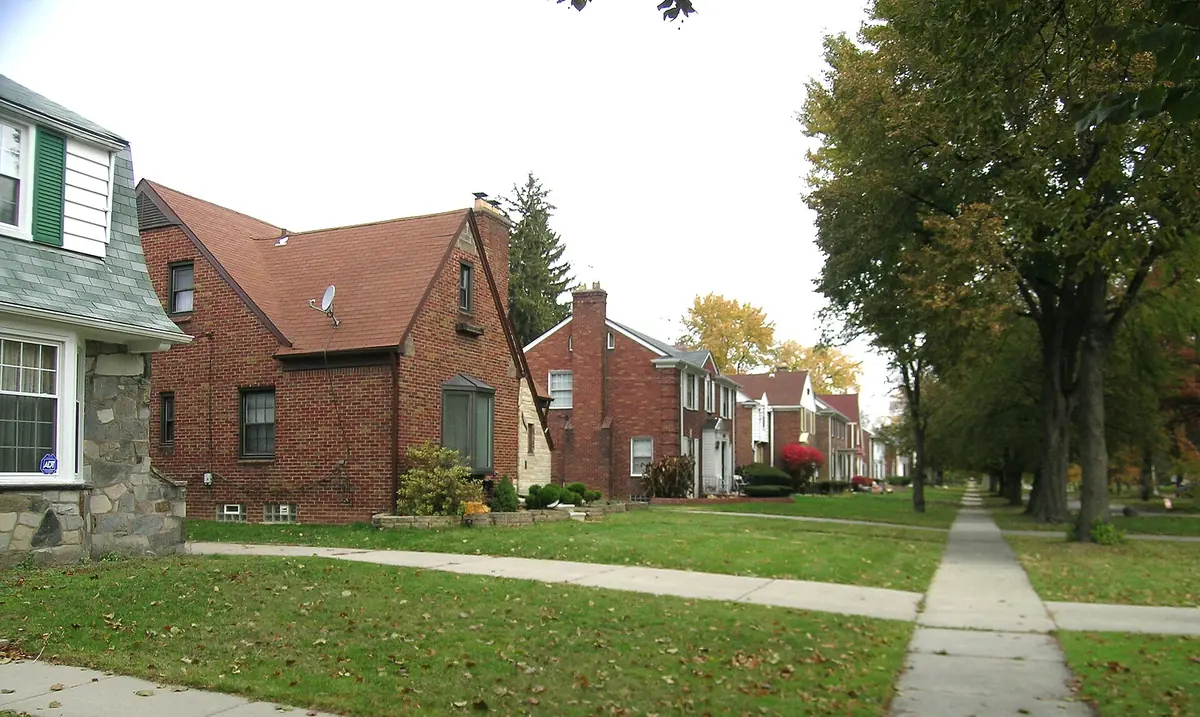
Grandmont-Rosedale sits on the west side of Detroit along Grand River Avenue. It is a settled residential area with a high share of occupied homes and active neighbourhood associations, and the housing stock is substantial: brick colonials, Tudor-style homes with steep roofs and stone or brick detailing, full basements, and mature trees over most streets. Solid brick does not mean a closed shell. It means the openings are concentrated in predictable places, the coal-era fittings, the foundation joints, the garage junction and the roofline, rather than spread across the whole building.
Mature trees deserve a measured mention. Canopy over a roof puts branches close to eaves and soffits, and gaps at that level are an attic route for mice. Tree cover also drops seed and fruit that can feed rodents at ground level if it is left to build up. Neither point makes a tree a problem. Both put the roofline and the ground line under big trees on the inspection list.
The wider city figures apply here too. About 86 percent of Detroit residential structures predate 1970, and most Grandmont-Rosedale homes were built before the Second World War. Age shows up as maintenance items, not as a verdict on the neighbourhood: mortar to repoint, a chute frame to reseal, a sill section to repair.
In Grandmont-Rosedale and hearing activity in the basement or attic? Call to book an inspection and get the coal-era openings checked.
Call (313) 555-0100How the Work Runs in a Grandmont-Rosedale Home
A visit begins with a full inspection that works the house in a set order: basement and coal chute first, foundation line inside and out, garage junction, then attic and roofline. Each opening is recorded on an entry-point map with photos. In a house of this age, the map is the useful document. It separates the two or three openings that matter from the long list of places that were checked and found sound.
Clearing follows the findings. Mice in an attic or wall void are handled with mouse trapping and monitoring, checked on a cycle suited to a house where activity may be spread between floors. Where droppings and nesting have built up in an attic over time, attic cleanup is planned after the animals are cleared and the entry points are closed, so cleaned space is not re-entered. Jobs booked through this site are handled by an independent Michigan-licensed operator, and the scope for your house is quoted in writing from the map.
Sealing is where this neighbourhood's stock sets the materials list. Entry-point sealing here usually means a coal chute door refitted or closed with sheet metal and sealed edges, foundation joints repointed with mesh backing where gaps are wide, pipe holes packed with copper mesh, and garage seals replaced so the door meets the floor at the corners. For a house used as a family home year round, whole-house rodent work ties the basement, living floors and attic into one plan rather than treating each report as a separate call. Follow-up visits recheck the sealed points, and seasonal timing matters: mice move indoors from September to February, so a map made in autumn tends to be the one that prevents a winter of trapping.
Problems and pain points in Grandmont-Rosedale
A 1920s or 1930s brick home can look solid from the street while scratching in the attic or wall void at night tells a different story. Droppings spread between floors, from the basement to the attic, leave homeowners unsure where activity starts and where it ends.
That uncertainty feeds two common worries: hidden damage to wiring and insulation in voids no one opens, and a quote that does not match the house. Here the inspection works in a set order and records each opening on a map with photos, the scope is quoted in writing from that map, and follow up visits recheck the sealed points.
Common entry points in Grandmont-Rosedale homes
| Housing feature | Where rodents get in | What closes it |
|---|---|---|
| Coal chute door in the foundation wall | Gap in the seal around a rusted or warped chute frame at ground level | Door refitted or closed with sheet metal and sealed at the edges |
| Block foundation | Open mortar lines, especially at corners | Joints repointed, with mesh backing where gaps are wide |
| Stone foundation | Deep joints that have lost mortar and hide a larger void behind a small opening | Joints repaired with mesh backing and masonry, not surface filler |
| Sill plate on top of the foundation | Gaps where the wood member has shrunk or rotted where it meets the wall | Sill section repaired and the joint sealed along the foundation line |
| Attached garage or breezeway link | Corner gap in the garage door, worn side door threshold, and gaps around pipes in the shared wall | Garage seals replaced, thresholds renewed, and pipe gaps in the shared wall packed |
| Roofline under mature trees | Gaps at eaves and soffits close to overhanging branches | Eave and soffit gaps closed at the roofline |
Signs to check in Grandmont-Rosedale homes
- Rust or gaps around the coal chute frame in the basement
- Open mortar joints at block or stone foundation corners
- Droppings or nesting in the attic above the garage
- Scratching in a wall void or attic at night
- Gaps around pipes where the garage meets the house
- Garage door corners that do not meet the floor evenly
- Seed and fruit buildup under mature trees near the foundation
Rodent services in Grandmont-Rosedale
Every Grandmont-Rosedale job is part of the wider service area covered across Detroit, and each service below is described in full on the main Detroit rodent control page.
Rodent Exclusion Detroit MI
Exclusion means sealing every entry point: coal chutes, block and stone foundations, sill plates, porch lines and garage gaps, closed with materials rodents cannot chew through. The step that stops new animals using the same routes.
Rodent Inspection Detroit MI
A full check of kitchens, attics, basements, crawl spaces, garages and the alley line, ending with an entry-point map and photos. Start here when you have signs but no certainty about the animal or the route in.
Rodent Prevention Detroit MI
The habits and checks that keep a clear house clear: food and trash habits, alley and garage harborage, the vacant house next door, and openings to watch before cold nights arrive.
Frequently Asked Questions
My house still has its coal chute. Does it need to be sealed even if the door looks shut?
It needs to be checked, not assumed open. Frames rust and doors warp, and the gap usually sits in the seal around the frame. If the frame is sound, that is recorded. If it is gapped, the door is refitted or closed with metal and sealed at the edges.
Can rodents get from my attached garage into the house?
Yes, if the junction is open. The routes are the shared wall, gaps around pipes and wires between the buildings, and the attic line above the garage. A corner gap in the garage door lets mice into the garage first. The inspection checks the junction as its own item.
Are gaps in a stone foundation really large enough for mice?
They can be. A mouse can work through a gap about the width of a pencil, and stone joints are deep, so a small surface opening can hide a larger void. Joints are checked inside and out, and wide gaps are repaired with mesh backing and masonry, not surface filler.