Food: the invitation most yards send without knowing
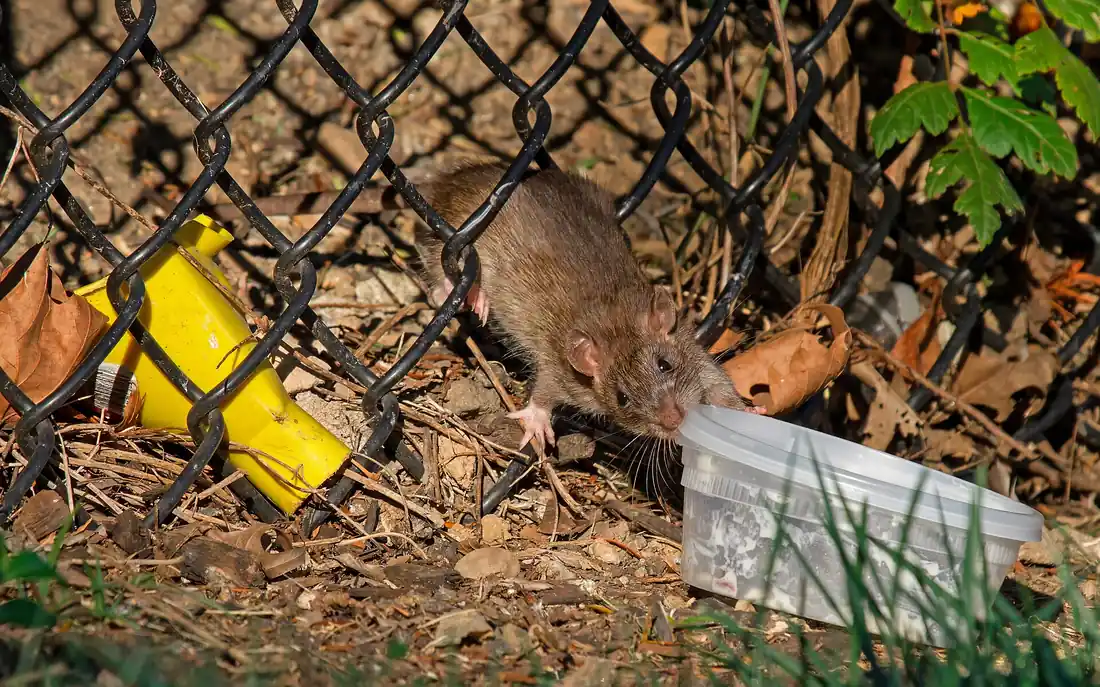
Norway rats are not picky, but they are consistent. A yard that feeds birds feeds rats: seed falls, collects under the feeder, and rats work it at night. Pet food left in a porch bowl, unsecured rubbish, fallen fruit, and vegetables left standing in a late garden all do the same job. Compost draws them when it holds food scraps near the surface, and a barbecue area with grease on the ground underneath is a quiet, reliable stop on a nightly run.
Detroit’s housing pattern adds one more feeder: the vacant lot. Grass gone to seed, dumped rubbish, and unmaintained alley edges feed and shelter rats next door to occupied homes, which is part of why the city’s own crews bait exterior harborage and why the property code, Section 8-15-105, puts the duty to keep premises free of harborage on the owner. If rats are eating in your yard but living in the lot next door, our rat removal page covers how that situation is handled as one job, not two.
Harborage: where yard rats actually live
A rat that feeds in your yard at midnight is sleeping somewhere within a short run of it. Burrows go into soft soil under porches, sheds, deck edges, woodpiles, and the base of thick shrubs; the burrow entrance is a clean hole about the width of a fist, often with a fan of loose soil and a smooth, worn path leading to it. Dense ground cover, ivy on a fence line, and junk stored against a garage wall give the same protection above ground.
Water completes the set. A dripping outdoor tap, a low spot that holds rain, or a pet bowl kept full outside lets a burrow site support young through the summer breeding season. Outdoor rat activity in Detroit peaks from June to October for exactly this reason: cover is thick, food is everywhere, and litters come fast. The yard half of the fix pairs with the house half on our prevention page, because a rat living under the porch is one foundation gap away from the basement.
- Burrow holes under porches, sheds, decks, and woodpiles, with worn paths between them
- Seed husks and droppings collecting under bird feeders
- Grease, fallen fruit, or pet food smells drawing night activity to one spot
- Dense ivy, brush, or stored junk giving cover right against the house
- A drip, puddle, or pet bowl providing standing water all season
Rats living in the yard and working toward the house? Call for an inspection of the burrows and the foundation in one visit.
Call (313) 476-6003Making the yard a poor target
Work the three needs in order. Food first: feed birds from a tray feeder you can clean, sweep fallen seed weekly, feed pets indoors, and keep rubbish in bins with lids that close. Garden produce comes in as it ripens, and food scraps go in a closed compost bin rather than an open pile. Water second: fix the dripping tap, grade or fill the low spot, and empty pet bowls at night.
Cover last, and this is the step people skip. Raise the woodpile off the soil on a rack, cut the ivy and brush back from the foundation, and clear stored material away from the garage and porch skirts so burrow holes are exposed and easy to spot. A burrow that loses its cover is usually abandoned within days. If holes keep reappearing after the yard is cleaned up, the colony is bigger than one yard, and the signs to check are laid out on our signs and problems hub.
- Clean fallen bird seed weekly; switch to a tray feeder or stop feeding for a season
- Feed pets indoors and store pet food and seed in sealed hard containers
- Fix dripping taps and fill low spots that hold water
- Raise woodpiles off the ground and cut cover back from the foundation
- Keep rubbish in lidded bins; never bags on the ground overnight
Questions Detroit Homeowners Ask
My yard is clean but I still see rats. Whose problem is it?
Possibly the neighbourhood’s, not just yours. Rats range over several lots in a night, and a vacant or unmaintained property nearby can hold the colony while your yard is only a feeding stop. Clean yards still help, because rats settle where all three needs meet, but a colony based next door usually needs the burrow site itself treated, which is why reports to the city about harborage on vacant lots matter.
Does a dog in the yard keep rats away?
Not reliably. Dogs disturb rats and may catch the odd one, but rats learn the dog’s routine within days and simply feed when the dog is in. Dog waste left in the yard actually attracts rats, since it is a food source. A dog is company, not a control method.
Will cutting the grass get rid of yard rats?
It helps but does not finish the job. Short grass removes cover and exposes burrow entrances, which makes rats nervous and easier to deal with. If the burrows under the porch or shed stay and the food stays, the rats stay too, just on a tighter schedule. Grass is one of the three fixes, not the whole fix.
Are yard rats the same ones that get into Detroit basements?
Yes, same animal and often the same colony. Norway rats burrow at foundation level, and a burrow along the wall is how many basement problems start. A yard colony in summer is the most common preview of a basement problem in autumn, which is why the two are best handled together.
More From the Blog
Work through the other Detroit rodent guides on the blog index, or go straight to the service page that matches your problem from the services list.