Why the count you see is never the count you have
Mice are nocturnal, quiet, and built to avoid open ground. The mouse you spot crossing the kitchen is the one that made a mistake. For every animal bold or hungry enough to be seen, others are running the same routes inside walls and under floors where nobody sees them. That is why professionals do not estimate from sightings; they read the evidence the whole group leaves behind.
The breeding maths is the rest of the answer. A female house mouse can produce a litter of five or six pups every three weeks or so through the warm part of the year, and the young breed within about two months. A pair that entered a Detroit basement in September can be a colony spread through the walls by the new year. This is also why a problem that looks stable for weeks can suddenly look much worse: it was growing where you could not see it.
The signs that separate a visitor from an infestation
Location spread is the clearest test. Droppings in one drawer is a visitor pattern; droppings in the kitchen, the basement, and the attic at the same time means established runs across the house. Volume matters too: a handful of droppings is a night or two of activity, while droppings in the hundreds, mixed fresh and old, mean weeks of it. Our signs and problems hub shows how to read each sign in context.
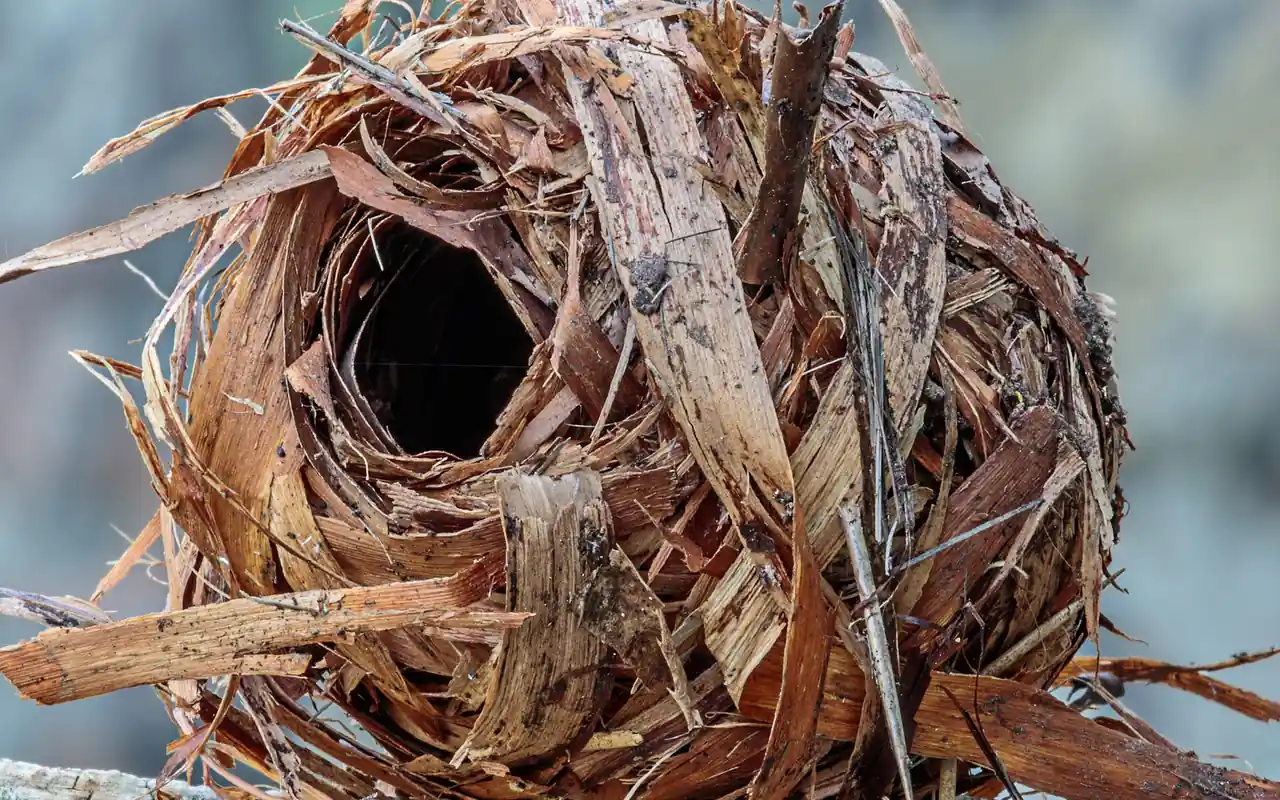
Nesting is the dividing line. A visitor sleeps behind a wall and leaves. An infestation builds: shredded paper, fabric, or insulation gathered into nests, usually in the attic, in stored boxes, or inside the voids around appliances. Add the smell of urine along runs, gnawed food in more than one room, and scratching you can set your watch by, and you are past the one-mouse stage. An inspection turns that reading into a count estimate based on nesting sites and runs rather than guesses.
| Sign | Likely a visitor | Likely an infestation |
|---|---|---|
| Sightings | One mouse, once, at night | Daytime sightings, or several in a week |
| Droppings | A few, in one spot | Many, in several rooms, fresh and old mixed |
| Noise | Occasional scratching, one wall | Nightly noise in walls and ceiling |
| Nesting | None found | Shredded material gathered in attic, boxes, or voids |
| Damage | One gnawed package | Gnawed food, wires, or wood in more than one room |
| Smell | None | Stale urine smell along runs and in cupboards |
Not sure which side of the line your house is on? Call for an inspection and get a straight count from the evidence.
Call (313) 476-6003What to do at each level
For a visitor, act the same week: set snap traps along the wall where the droppings are, remove the food it found, and seal the gap it used if you can find it. Check the traps daily. If a week of trapping catches nothing and no fresh droppings appear, the visitor has moved on or been caught, and sealing is what keeps the next one out.
For an infestation, trapping alone turns into a hobby: you will catch mice steadily while the colony replaces them. The job changes to clearing the population and closing the shell together, which is the programme our mouse control page describes, followed by sealing so the cleared house stays cleared. The cost of waiting is not linear. Each three-week litter is another set of nests in the insulation and another month of droppings in the walls.
- Photograph and map droppings by room; the spread tells the story
- Check the attic and stored boxes for nesting material
- Trap a visitor immediately; do not wait to see if it leaves
- Daytime sightings or droppings in three or more rooms means call
- After any clear-out, seal the entry points or the count restarts
Questions Detroit Homeowners Ask
I caught one mouse and the droppings stopped. Am I done?
Possibly, for now. Keep two traps set along the same run for another two weeks and check for fresh droppings every few days. If nothing appears, seal the likely entry point and store food in hard containers. Stopped droppings with an open gap is a pause, not a finish.
How many mice are usually in a house infestation?
Most established home infestations run from about a dozen to two dozen mice, but the honest range is wide: a new colony may be six, and a long-ignored one in a large older home can be several dozen. The number matters less than the spread, because spread is what decides how much sealing and clearing the job needs.
Do mice ever just leave on their own?
Individual mice die or move, but a breeding group with food, water, and nesting sites has no reason to leave, and its numbers grow until the space limits it. Waiting is a decision to host the colony at its full size. The only reliable eviction is removing the animals and closing their way back in.
Why did the problem explode all at once in winter?
It did not. Autumn entry and steady breeding built the numbers quietly through the autumn, and winter pushed the whole group into daily contact with the warm, food-carrying parts of the house. Winter is when an infestation announces itself, not when it starts.
More From the Blog
Work through the other Detroit rodent guides on the blog index, or go straight to the service page that matches your problem from the services list.